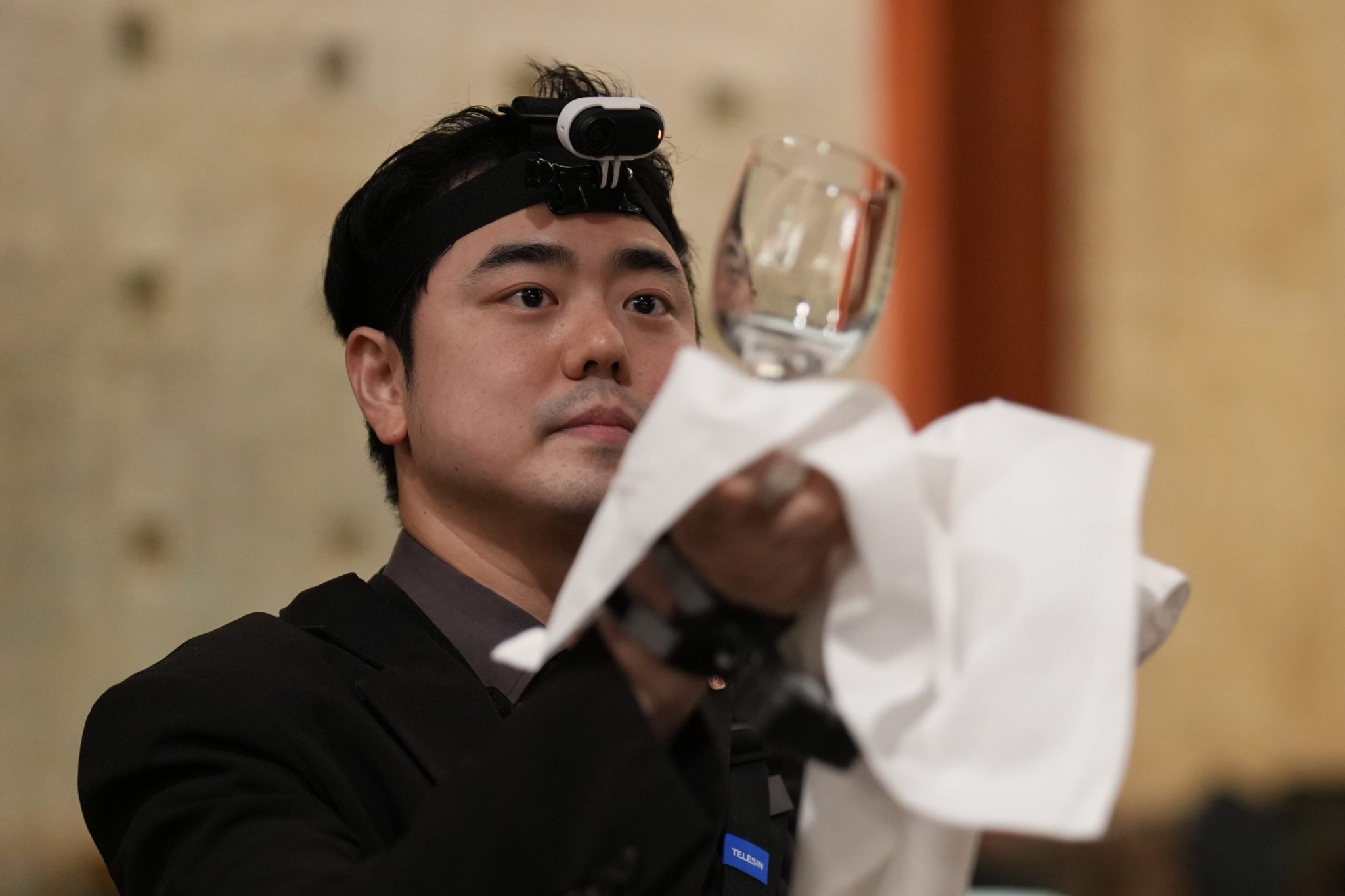
This South Korean hotel worker is training a robot to fold a banquet napkin: ‘I’ve been doing this about once a month’
His head, chest and hands strapped with body cameras, David Park deftly folded a banquet napkin the way he has thousands of times during his nine years at the five-star Lotte Hotel Seoul. Each of his motions is fed into a database that will one day teach a robot to do the same. The hotel chain is one of many companies South Korean artificial-intelligence startup RLWRLD (pronounced “real world”) is working with to create an extensive library of human expertise, harvested from skilled workers across industries, to develop AI brains for robots that could be coming to industrial sites and homes. It collects similar data from logistics workers at CJ, capturing how they grip, lift and handle goods in warehouses, and from staff at a Japanese convenience store chain Lawson, tracking how they organize food displays. The goal is to build an AI software layer that can work in robots across a range of factories and other work sites in coming years, before potentially expanding into homes. RLWRLD’s engineers say replicating the dexterity of human hands is a key priority, reflecting their views that humanlike machines, or humanoids, will drive the field. “I’ve been doing this about once a month,” said Park, one of about 10 members of Lotte Hotel’s food and beverages team being wired up to capture their techniques. After folding the napkin into a tight, layered square, Park wiped wine glasses, knives and forks in a corner of a banquet hall as colleagues prepared for real services nearby. He complained lightly to an engineer that the cameras on his hands felt too tight. South Korea focuses on physical AI RLWRLD is among a wave of South Korean high-tech firms and manufacturers competing in the unproven yet fiercely contested global market for “physical AI.” The term refers to machines equipped with AI and sensors that can perceive, decide and act in real-world environments with some degree of autonomy, moving beyond conventional factory robots designed for repetitive tasks. While it