The 2020 signal returns: Why the copper-to-gold breakout could point to bitcoin breakout
Key takeaways
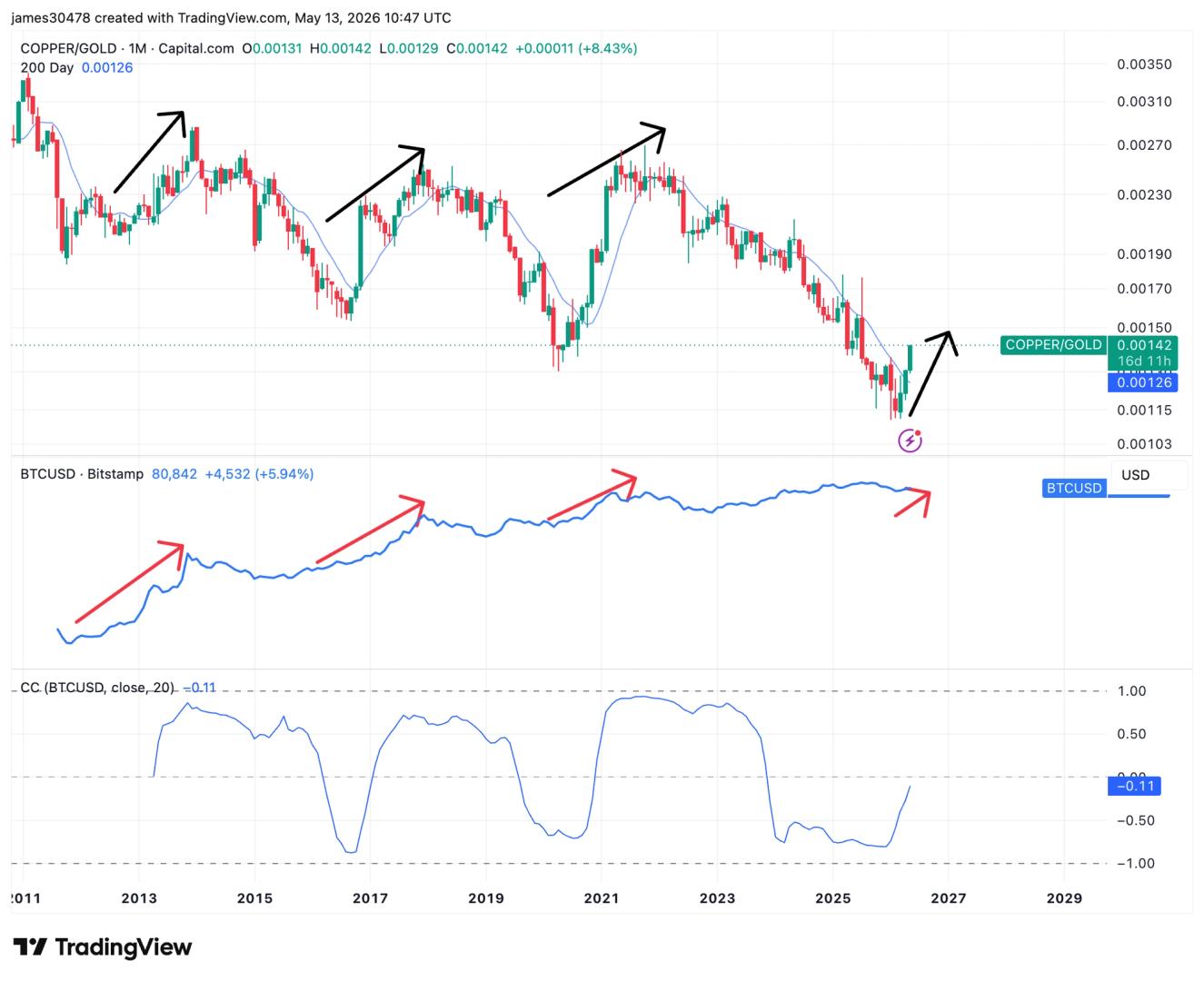
- The ratio currently stands at 0.00142, with copper trading at $6.65 per pound and gold near $4,700 per ounce.
- The correlation coefficient between bitcoin and the copper-to-gold ratio currently sits at -0.11, though it has rebounded sharply from -1.00.
- The current negative reading largely reflects the earlier divergence phase, when the ratio was falling and bitcoin typically declined faster than copper.
The ratio has climbed above its 200-day moving average for the first time meaningfully since September 2020, a move that has historically preceded major bitcoin rallies.By James Van Straten, AI Boost|Edited by Jamie Crawley May 13, 2026, 12:18 p.m. 1 min read Make preferred on Copper/Gold Ratio, Bitcoin (Trading View)What to know: The copper-to-gold ratio has risen 25% from its lows and historically leads bitcoin by weeks to months, reinforcing the view that the current crypto rally may still be in its early stages. Although the correlation between bitcoin and the ratio remains slightly negative at -0.11, it has rebounded sharply from almost -1.00, suggesting the relationship is beginning to strengthen as macro risk appetite improves.Historically, the copper-to-gold ratio has led bitcoin by several weeks to months, suggesting the current move may still be in its early stages.The copper-to-gold ratio has broken above its 200-day moving average for the first meaningful time since September 2020, a development that has historically coincided with the early stages of bitcoin BTC$80,492.82 bull markets.
The ratio currently stands at 0.00142, with copper trading at $6.65 per pound and gold near $4,700 per ounce. Previous surges in the ratio during 2013, 2017, and 2021 aligned with major gains in bitcoin prices.
The correlation coefficient between bitcoin and the copper-to-gold ratio currently sits at -0.11, though it has rebounded sharply from -1.00. This suggests the two assets are not yet positively correlated, but the relationship is beginning to strengthen. Historically, during bitcoin’s strongest bull runs, the correlation has moved toward or above 1.0.