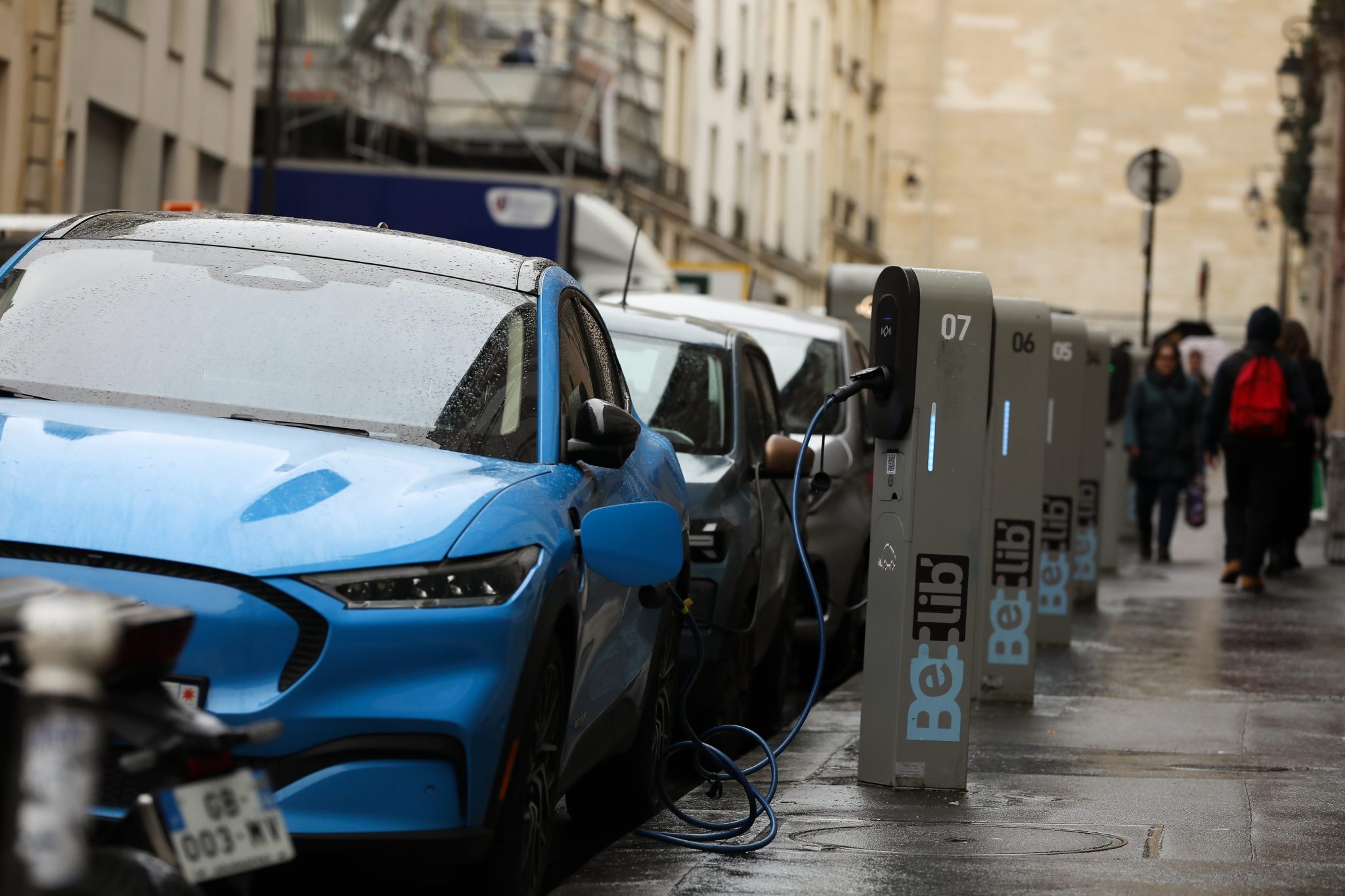
The Iran war is accelerating the EV transition faster than any climate policy ever did—but it’s still just not that much
When the U.S. launched strikes on Iran in late February, the immediate concern was oil prices. The Strait of Hormuz—through which roughly 20% of global oil supply flows—closed, sending energy markets into a spiral and gas prices past $4 a gallon in the U.S. within weeks. Domestically and abroad, people felt the oil supply at the pump: Moody’s estimated it would cost Americans over $100 billion at the pump; gas rationing began in Bangladesh, South Korea imposed a fuel price cap, and so on. That gas scarcity might have sounded like what you’ve heard of the 1970s, but it’s resulted in a historic surge into electric vehicles that is still essentially a trickle. For the first time in history, more than a quarter of all car sales were EVs, Goldman Sachs commodities team wrote in a recent research report. In the grand scheme, the number is pretty paltry, especially considering the early iteration of the Prius was first released nearly three decades ago, and Teslas and other higher-end EVs first came out nearly 15 years ago. But still, the report finds a 3.4 percentage point increase on global EV sales since the Hormuz shock began, reaching 26.1% of all car sales in May, an all-time high. The acceleration has been broad-based: 12 of the 15 largest EV markets have seen penetration rise since February, Goldman found. The bank now estimates the shift could shave 0.13 to 0.32 million barrels per day off global oil demand by December 2027, a figure that, while modest against roughly 100 mb/d of total consumption, carries outsized significance for a market already navigating a supply crisis. “This acceleration in global EV car sales suggests our downside oil price scenario is plausible,” the report read. Goldman’s analysts project Brent could fall to the mid-$50s per barrel by late 2027 if Hormuz constraints persist and EV momentum holds. China leads, but the shift is global No market has moved faster than China, according to the report. EV pen