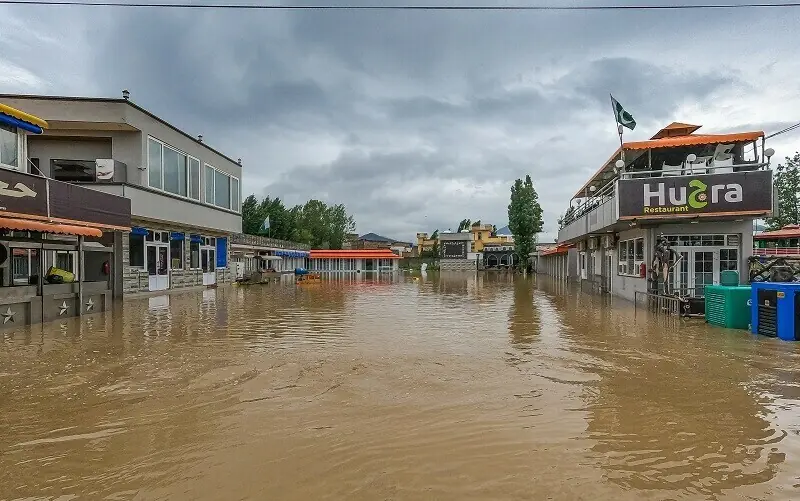
Melting mountains and returning floods — Swat’s climate emergency
Why this matters: local context for readers following news across Pakistan and the region.
SWAT: On June 27, authorities issued a Glacial Lake Outburst Flood (Glof) alert for the northern districts of Khyber Pakhtunkhwa, including Swat, warning that soaring temperatures were expected to accelerate snow and glacier melt across mountain valleys and increase the risk of flash flooding, landslides and sudden inundation downstream. Authorities urged monitoring of vulnerable sites, evacuation preparedness and public awareness in communities living along rivers and streams. For the residents of Swat, however, the warning did not sound theoretical. It reopened memories of a crisis that has unfolded over more than a decade, one measured not only in damaged roads and collapsed bridges, but also in disrupted identities, broken landscapes and communities learning to live with uncertainty. The Swat River has always been dynamic. Its channels shift, widen and reclaim floodplains during periods of high discharge. Yet in recent years, changing climate patterns combined with expanding development have altered the relationship between people and the river. Satellite-based information published through Space4Climate, powered by the Pakistan Space and Upper Atmosphere Research Commission (Suparco), has highlighted how urban expansion into active floodplains at Bahrain increased exposure to flood damage. Comparative imagery published for 2010–2022 shows substantial construction along sections of the river corridor, narrowing natural water pathways before the destructive floods of August 2022. According to the Emergency Events Database (EM-DAT), the country has faced 89 flood events in the last 25 years, with impacts becoming more severe due to increasing urban expansion and development within active riverbeds and floodplains. Using satellite-based monitoring, Suparco provides continuous assessments of river behaviour and surrounding land use, supporting informed decision-making for flood risk reduction and climate-resilient development. Normal river water as of May 2022 appea