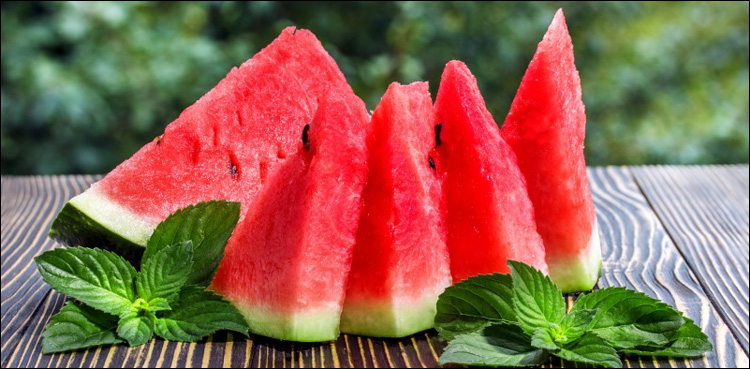
Is your watermelon injected? Here’s how to check
Key takeaways
- Speaking to ARY News, the nutrition expert explained that watermelon is an important summer fruit that helps prevent dehydration and heatstroke due to its high water content.
- According to Ayesha Nasir, injecting chemicals into watermelons is not as simple as commonly portrayed online because the fruit’s outer rind is naturally thick and hard.
- She further explained that watermelon naturally contains “lycopene”, a red pigment that may leave a faint pink or reddish stain on tissue paper.
Why this matters: local context for readers following news across Pakistan and the region.
Add ARY News on Google AAResize Concerns circulating on social media about watermelons being injected with chemicals to make them artificially red and sweeter have caused hesitation among consumers, but nutrition expert Ayesha Nasir says such claims are largely exaggerated.
Speaking to ARY News, the nutrition expert explained that watermelon is an important summer fruit that helps prevent dehydration and heatstroke due to its high water content. However, she advised consumers to take certain precautions while consuming it.
According to Ayesha Nasir, injecting chemicals into watermelons is not as simple as commonly portrayed online because the fruit’s outer rind is naturally thick and hard. She noted that if a watermelon had actually been injected, a clear puncture mark would likely be visible on its surface.