Agentic Frameworks: Or different ways to make LLM API calls
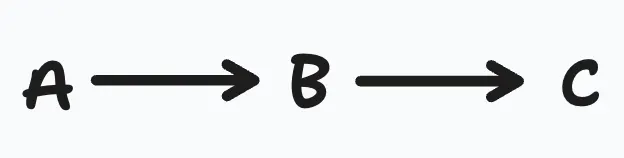
The agentic framework research has produced some very interesting results; from different topologies to different ways of using tool-calls, it has been one of the most fascinating and accessible areas of research in the AI landscape. In this essay, I’d like to talk about some core structures that sit at the heart of various agentic framework applications we have seen, and some (possibly) new directions I’d like to explore.I.We must, before anything else, define the most primitive tool we have: a simple text-in-text-out API call. Following that, we have perhaps the most important one: JSON or structured outputs. Taking these two API calls, we can come up with four different paradigms (methodologies?) for creating frameworks, and explore which ones accomplish certain goals better than a simple TITO API call.The Sequencing Model : The first framework is also the simplest: just call the LLMs in succession, each time with a different task and tool combination, with the output from the previous call appended/fed into the subsequent call. This is a simple way of managing context and separating tool usage per API call. API call in sequenceThe Branching Model : The next framework is but a simple modification over the previous one, wherein we allow for two simultaneous LLM API calls to be made, assigned independent tasks which can be completed without dependency problems. This was one of the more widely implemented frameworks, especially in workflow settings. Almost all “agent“ implementations today follow this framework, using libraries like LangGraph, Mantra or n8n. This setup gives rise to structures like agentic trees and graphs, where each node is defined using a system prompt plus a tool-set. Most commonly implemented is a workflow graph setting. API calls, branchingThe Looping Model : Here we finally arrive at the most implemented, widely known and perhaps the most effective framework: looping the model. We start with an outer loop called the REPL, which repeatedly tak