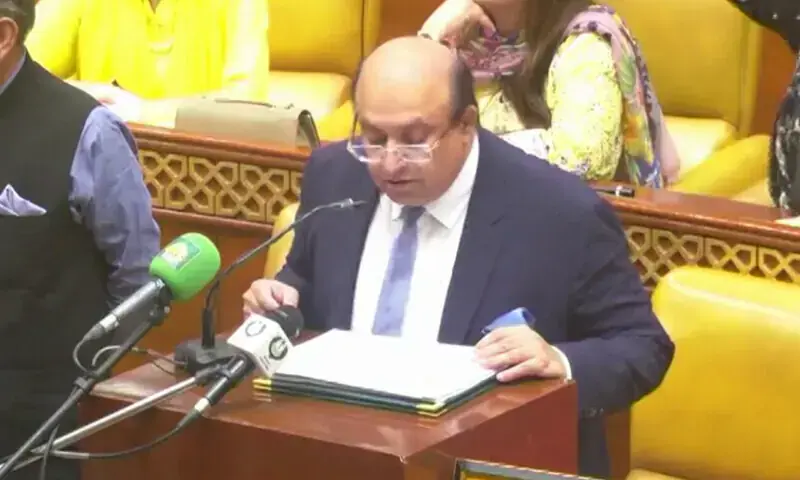
PUNJAB BUDGET 2026-27: Punjab to set up ‘FBR-like’ revenue authority, says minister
Why this matters: local context for readers following news across Pakistan and the region.
LAHORE: Punjab will establish a unified revenue authority on the model of the Federal Board of Revenue (FBR) during the next fiscal year, bringing all provincial taxes under a single institutional framework, Finance Minister Mian Mujtaba Shujaur Rehman told a post-budget press conference here on Wednesday. The province successfully achieved 99 per cent of its tax collection target during the outgoing fiscal year, while the revenue target for FY 2026-27 has been increased by 46pc, he added. Expressing confidence in the government’s revenue reforms, he said the enhanced target would also be achieved successfully. Accompanied by Senior Minister Marriyum Aurangzeb, Information Minister Azma Bukhari and others, Rehman announced that Punjab’s own-source revenues are expected to witness an increase of 30 to 40pc. Says streams of revenue to come under single institutional framework; rebuffs certain rumours relating to revenue and development He claimed that significant improvements in revenue collection have been achieved through eliminating corruption in the tax administration and expanding the provincial tax base. He stated that during the current fiscal year, the Punjab Revenue Authority (PRA) exceeded its assigned target by collecting 30pc more revenue, while the Excise and Taxation Department recorded a 12pc increase in collections. Among the non-tax revenue-generating departments, the Mines and Minerals Department emerged as the leading contributor. In view of the sustained growth in revenue generation, the collection target for the Punjab Revenue Authority has been enhanced to Rs528 billion for the next fiscal year, while the Excise and Taxation Department has been assigned a target of Rs124bn. Similarly, a target of Rs461bn has been proposed for non-tax departments. The minister said only a modest revision in certain existing tax rates has been proposed for the upcoming fiscal year in light of prevailing economic circumstances. He explained that one of the key reaso