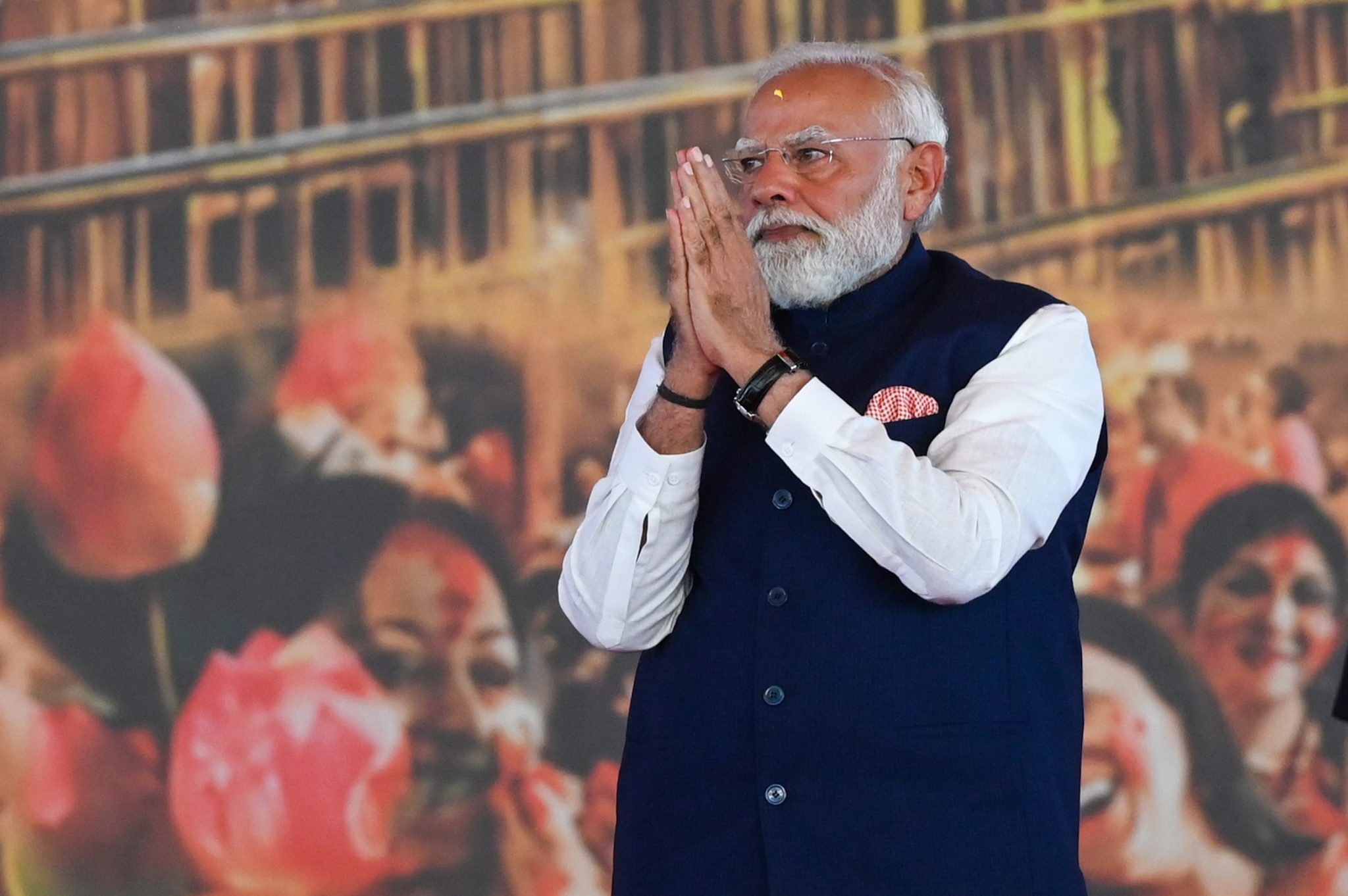
India brings back COVID-era work-from-home rules and asks farmers to halve fertilizer use as the Iran war chokes its oil lifeline
Indian Prime Minister Narendra Modi is bringing back COVID-era work-from-home arrangements as the war in Iran cuts off a major oil lifeline. In an address earlier this week, the prime minister said Indians should make arrangements to work from home and take more virtual meetings. If citizens must leave home, they should take public transportation, such as the bus or metro, or carpool if a private vehicle is necessary. The prime minister also asked citizens to limit international travel and pause purchases to keep foreign currency in the country, and asked farmers to halve their fertilizer use, which requires oil to produce. Conserving oil and other resources is a patriotic duty as the war in Iran strains them, Modi said. “Patriotism is not only about the willingness to sacrifice one’s life on the border. In these times, it is about living responsibly and fulfilling our duties to the nation in our daily lives,” Modi said Sunday during a speech in the southern city of Hyderabad, according to the BBC. Modi’s appeal to Indians to work from home is meant to reduce commuting in private vehicles, which are the dominant mode of transportation in India. In 2025, the country of 1.5 billion people registered 25 million new vehicles, 88% of which were private vehicles, either two-wheeled or cars, according to IMPRI, a startup research think tank. That’s compared to 16.3 million registered in the U.S. in 2025, according to Cox Automotive. The prime minister’s comments come as the war in Iran has slowed traffic through the Strait of Hormuz, through which 20 million barrels of oil passed daily before the war. This flow of oil has slowed to a trickle because of the conflict, and India may be one of the countries most at risk. The country imports 85% of the fuel it uses. About half of its crude imports and 60% of its liquefied natural gas imports must pass through the Strait of Hormuz. India spent nearly $175 billion on petroleum product imports, about 22% of its t