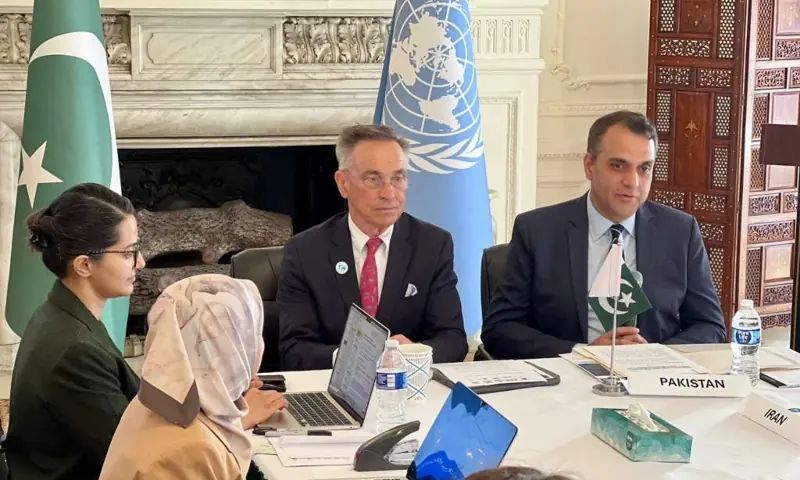
Pakistan pushes for global action against hepatitis amid alarming WHO findings
Why this matters: local context for readers following news across Pakistan and the region.
Pakistan used a high-level diplomatic gathering at the United Nations on Wednesday to build international support for stronger global action against viral hepatitis, while new World Health Organisation (WHO) data underscored the scale of the challenge facing the country. The Permanent Mission of Pakistan to the UN and the Secretariat of the UN Group of Friends to Eliminate Hepatitis co-hosted a strategic briefing on the sidelines of the UN High-Level Meeting on HIV/AIDS under the theme, “Advancing Hepatitis Elimination: Building Momentum toward High-Level Political Action”. The meeting brought together health ministry officials, diplomats and global health experts to discuss viral hepatitis, a disease that claims approximately 1.3 million lives annually worldwide. Participants also explored pathways toward securing a standalone UN High-Level Meeting on Viral Hepatitis by 2028. Opening the event, Pakistan’s Deputy Permanent Representative to the UN Ambassador Usman Jadoon highlighted Islamabad’s commitment to tackling one of the country’s most serious public health challenges. “The government has launched the Prime Minister’s Programme for the Elimination of Hepatitis C, allocating $250 million in collaboration with the World Health Organisation to eliminate Hepatitis C as a public health threat by 2030,” Ambassador Jadoon said. He stressed that the initiative provides “entirely free screening, diagnosis, and treatment” to patients across the country. “To ensure effective oversight and accountability, the prime minister himself is leading the National Task Force, which oversees the program’s progress and provides strategic direction,” the ambassador added. Ambassador Jadoon noted that the task force included “a distinguished group of international and national experts, including leading public health experts, clinicians, researchers, and government officials”, reflecting the government’s determination to pursue a science-based approach to hepatitis elimination. The b