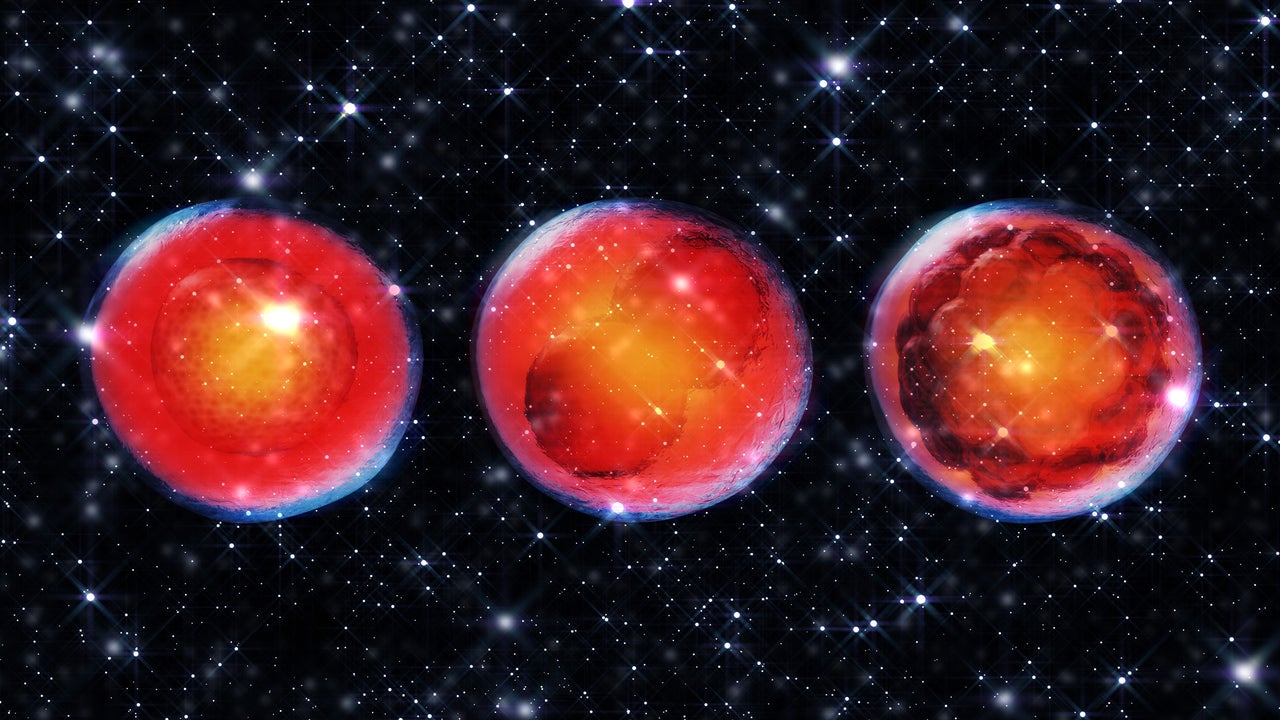
China is researching whether we can have babies in space
There are a number of things we take for granted here on Planet Earth that are challenging in outer space. The sense of taste is dulled. Going to the bathroom is an ordeal that involves vacuums. And sleeping is a challenge, due to the lack of gravity and sunrise every 90 minutes. One thing that scientists haven’t closely studied, to date, is whether humans can reproduce beyond the Earth. That’s about to change. China is conducting an experiment on its space station that it hopes will help underscore the risks associated with conception in a low- or zero-G environment. That could yield critical information as public and private colonization efforts for the moon and Mars move forward. Sex is not part of the Chinese experiments. The People’s Republic is not sending astronauts 250 miles into the sky to get it on. Instead, embryo-like structures (which do not have the ability to develop beyond the embryo stage), made from human stem cells, were sent onboard the station and will spend five days in low-earth orbit. That’s when early development occurs after fertilization and most organs begin to form. Abnormalities at this stage can impact a person’s development. Scientists are interested in seeing what impact microgravity will have on the embryos, including whether it would increase the risk of birth defects. Once scientists understand any potential impact, they can work on developing interventions, which could mitigate any effects. This isn’t the first examination of conception in a zero-G environment. Three years ago, Japanese scientists brought two mouse embryos to the International Space Station, culturing them to see what impact the environment would have. The answer: nothing of note. Mice aren’t human, though. So China’s experiment, even though it uses stem cell-made embryos, is raising more eyebrows. Up until a few years ago, this sort of study could not have been done, as there were international agreements that limi