Guest post: Climate change has caused one-fifth of Pine Island glacier retreat
Why this matters: environmental and climate reporting with long-term consequences.
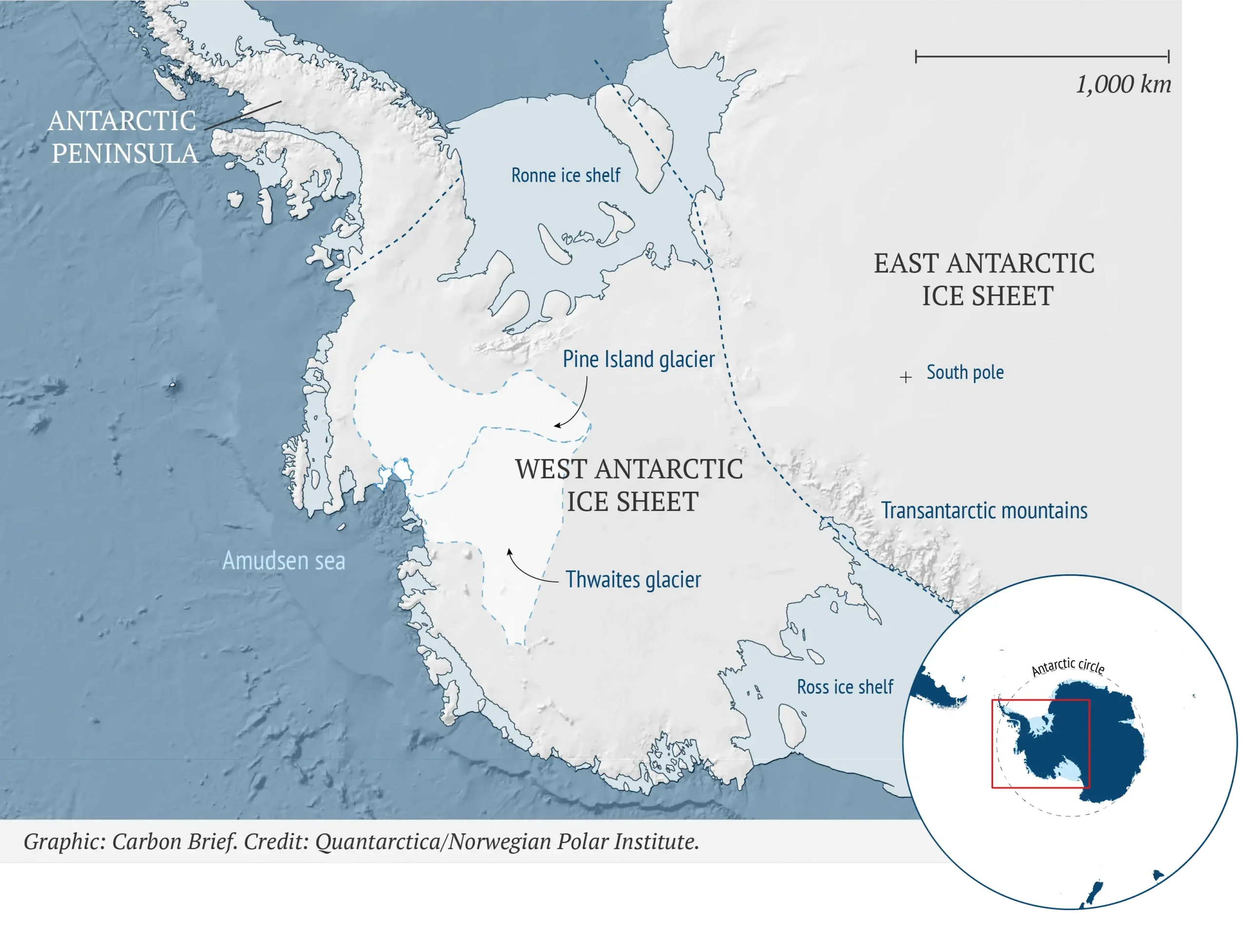
The Pine Island glacier in West Antarctica is one of the fastest-changing glaciers in the world. Alongside its neighbour, the Thwaites glacier, it is responsible for almost half the sea level rise caused by melting ice sheets in Antarctica. Scientists know the West Antarctic ice sheet – which includes Thwaites and Pine Island – is retreating because of warm water eroding the ice sheet from below. But the extent to which this process has been driven by human-caused greenhouse gas emissions, as opposed to natural variations to the Earth’s climate, remains unknown. Our study, published in the Cryosphere, looks at how human-caused warming has contributed to the retreat of the Pine Island glacier since pre-industrial times. The research, the first attribution study of glacier retreat on Antarctica, finds that climate change has been responsible for around 4km – roughly a fifth – of the glacier’s retreat. The West Antarctic ice sheet Glaciers are frozen rivers of ice and snow that move slowly over land. They are found at high elevations on mountains and on ice sheets. There are two ice sheets on Earth – covering Antarctica and Greenland. Both were formed over millennia, as layers of snow compressed into dense ice. Ice sheets grow and shrink depending on temperature and snowfall conditions. In the past, when global temperatures were much colder than present day, vast ice sheets also covered large areas of North America, Scandinavia and Patagonia. Today, human-driven climate change is accelerating the retreat of ice sheets. This is contributing to sea level rise and altering the Earth’s climate system by pumping vast quantities of fresh melt water into the ocean. Our research looks at the Pine Island glacier, which is found on the western part of the Antarctic ice sheet. It is one of the fastest-melting glaciers in the world. Research has shown it has been responsible for a fifth of net ice loss from the West Antarctic ice sheet, which, in turn, has been responsible for alm