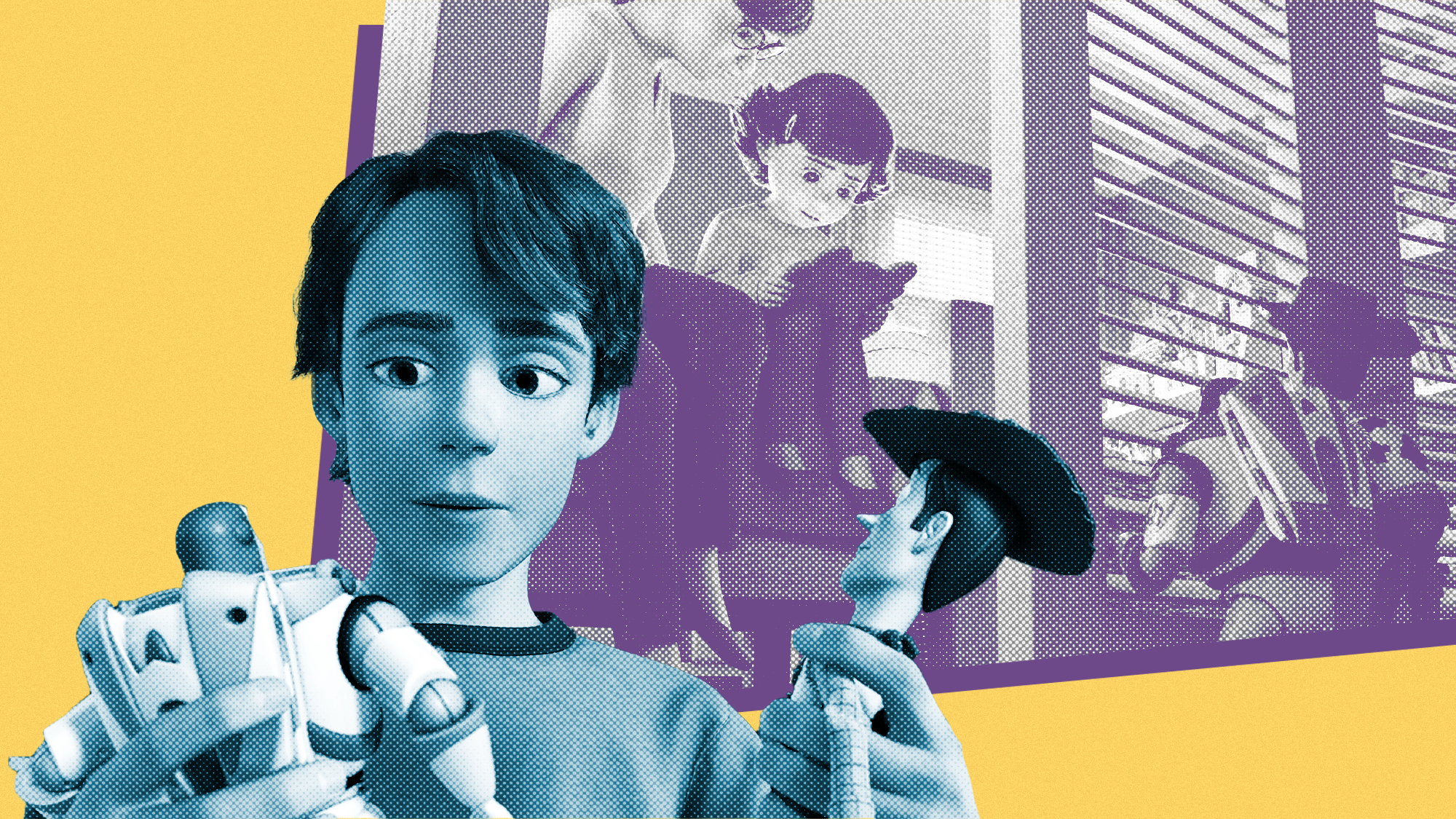
The Toy Story Franchise Forgot Its Own Message
Has there ever been a greater trilogy? The Godfather, monumental as its first two installments are, peters out in Part III. Same with Alien and Terminator. Back to the Future and Indiana Jones more or less land the plane, but the follow-ups never hit the heights of the originals. Richard Linklater’s Before trilogy and Krzysztof Kieślowski’s Three Colors trilogy are masterpieces start to finish, but they lack the operatic scale and mainstream appeal of, say, Star Wars or Lord of the Rings. Those latter two franchises both have a credible claim to the title, but the glut of subpar sequels and spin-offs has diluted their magic. For my money, none of them measures up to Toy Story.Is this an entirely neutral and clear-eyed assessment? Well, let’s just say that as a child I owned no fewer than nine Buzz Lightyear action figures. This much, though, is beyond dispute: Financially, culturally, artistically—by any metric, really—the original Toy Story trilogy is a triumph. The first movie, released in 1995, practically invented computer animation and became the first animated film to earn a Best Screenplay nomination at the Oscars. The next two installments, out in 1999 and 2010, were just as good. Each ranked among the three highest-grossing films worldwide in the year of its release; Toy Story 3 was the first animated feature to crack $1 billion at the box office. They were successful in part because the films appeal to both children and adults. They are about friendship and existential angst. They combine the prelinguistic appeal of bright colors and physical comedy with a peppering of allusions to Jurassic Park, The Shining, The Wizard of Oz, and innumerable other classics. Taken as a whole, the trilogy captures what it’s like to grow up in all of childhood’s ambivalent complexity.The epic begins with a birthday party. In the opening scene of Toy Story, 6-year-old Andy unwraps a new Buzz Lightyear action figure, and Woody, a mid-century cowboy doll with a sheriff’s badge