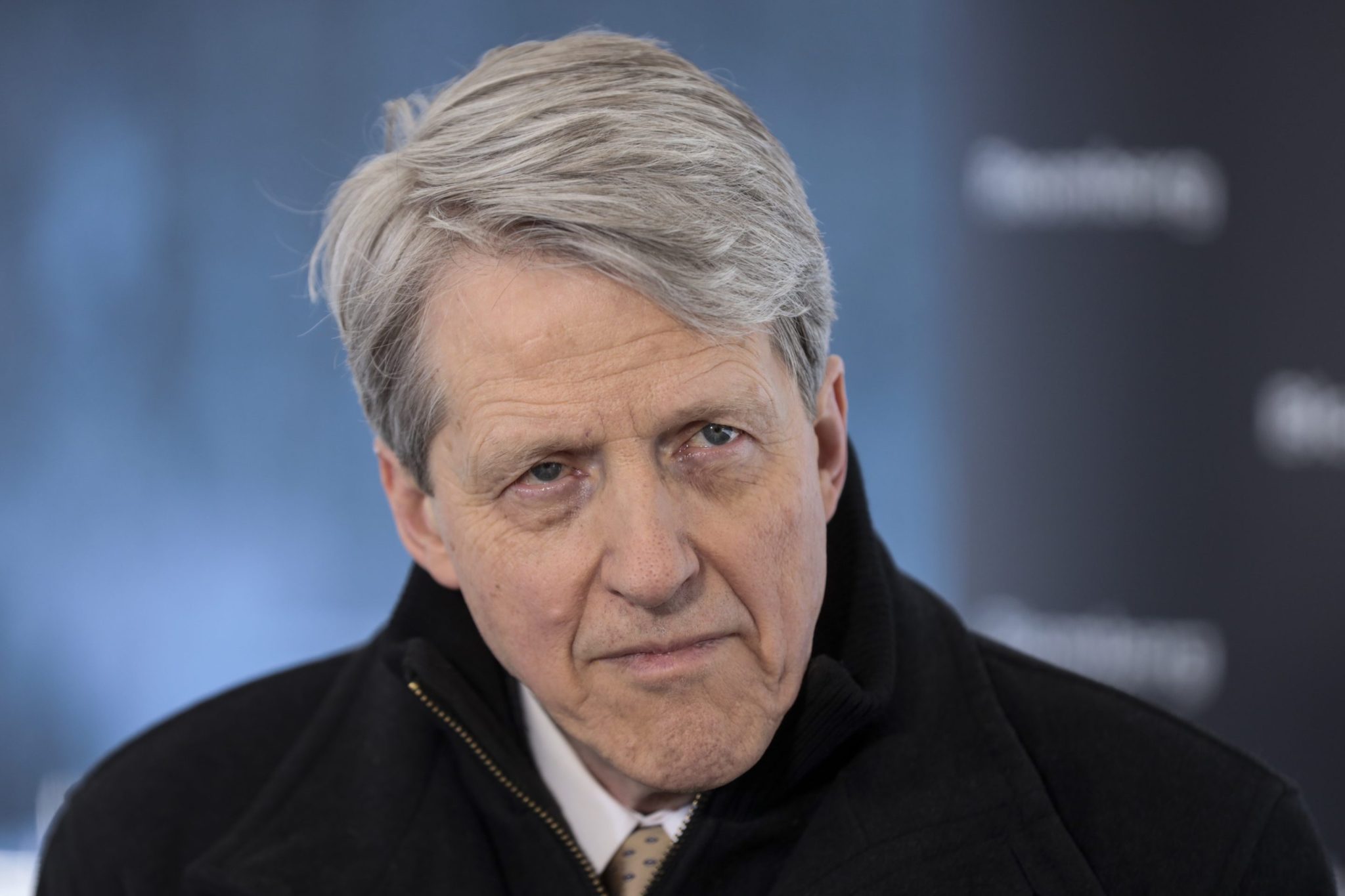
Nobel laureate economist warns AI jobs apocalypse fears could become a self-fulfilling prophesy
The disparity between the trillions spent fueling AI and the distaste of the people meant to adopt it has grown into a chasm. Only 16% of Americans believe AI will have a positive impact on society over the next 20 years, according to a recent survey conducted by Pew, while 40% expect the opposite.There’s a number of reasons people detest AI—the data centers are disruptive, it gobbles up water—but by far the most salient one is that it could take jobs. Robert Shiller, a Nobel economist, worries that that panic could become a self-fulfilling prophecy. In a guest essay in The New York Times on June 22 headlined “This Doommaxxing Has Got to Stop,” the Yale economist expanded on his Nobel-prize winning work on how markets misprice risk. He’s now interested in the cause of that mispricing, and the cause, he argued, is about narrative, the stories people tell each other about where the economy is headed. “When millions of people make millions and millions of decisions based upon negative expectations, there is a risk that fear can actually help birth the reality,” he warned.The fear that the machines are coming for workers is an old one. But in each instance, fear ran ahead of the actual displacement, according to Shiller. Luddites revolted against the loom in the 1830s, while newspapers perpetuated the drama. The 1920s got a hit play R.U.R., in which the robots rise against the people who built them. Similarly, the 1929 stock market crash couldn’t have caused the Great Depression as only about 2% of American households owned stock at the time. What deepened the economic ruin was a collapse in consumer spending, driven by sudden, widespread uncertainty about future income. And a 1957–58 downturn was branded the “Automation Recession” by journalists who pinned it on factory machines; it was later re-described as an ordinary cyclical dip. Shiller worries the same misattribution is underway now. The job market has slowed for a host o