Digital deal
Why this matters: local context for readers following news across Pakistan and the region.
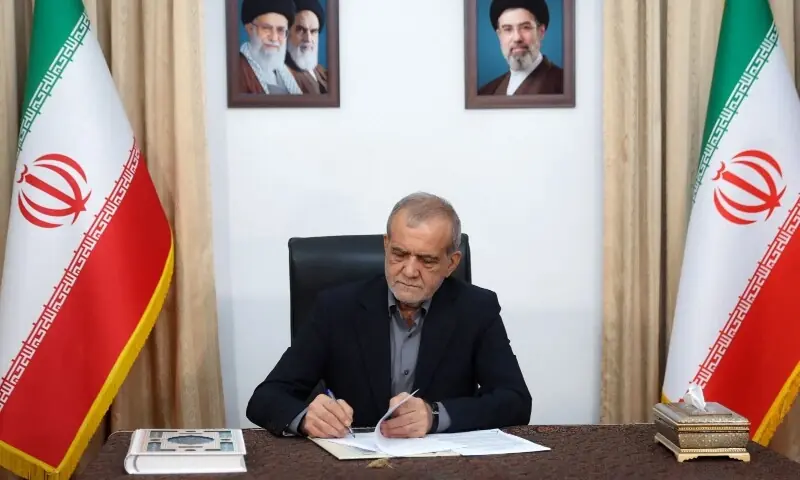
THINGS have moved rapidly where the Iran-US memorandum of understanding is concerned. While the physical document was supposed to be signed in Switzerland today, the main stakeholders — including the American and Iranian presidents — have already put their signatures on the digital dotted line, with Prime Minister Shehbaz Sharif adding his as mediator. Now, if all goes as planned, the actual negotiations will kick off in the rarefied environs of Buergenstock, with Washington and Tehran’s representatives getting down to the more difficult task of how to implement the 14-point MoU. While no physical copy of the deal is available, the details contained in media reports — said to be read out to journalists by a US official — make for interesting reading. For all its bluster targeted at the Iranian government in the run-up to and during the war, if even half of these points are agreed to, the Trump administration would have given Tehran a better deal than the Obama-era JCPOA. For example, the document says that all military operations will be terminated in Lebanon — an Iranian stipulation that has caused much heartburn in Israel. Furthermore, the MoU says that neither state will interfere in the other’s affairs, meaning the Iran regime change project may be coming to an end. Also, there is talk of lifting sanctions on Tehran, downblending of Iranian uranium “on site” under IAEA supervision, unlocking frozen funds, and $300bn for the Islamic Republic’s “reconstruction and economic development” — which sounds very much like war reparations. No wonder there are howls of protest in Tel Aviv and from anti-Iran hawks in Washington. Instead of destroying the Islamic Republic, Donald Trump may have set the stage for its regional and global reintegration through a botched war, and a deal that appears to have met most of Tehran’s demands. Of course, reaching the final agreement will require walking a long and winding road. There are many pitfalls along the way, with most of the tr