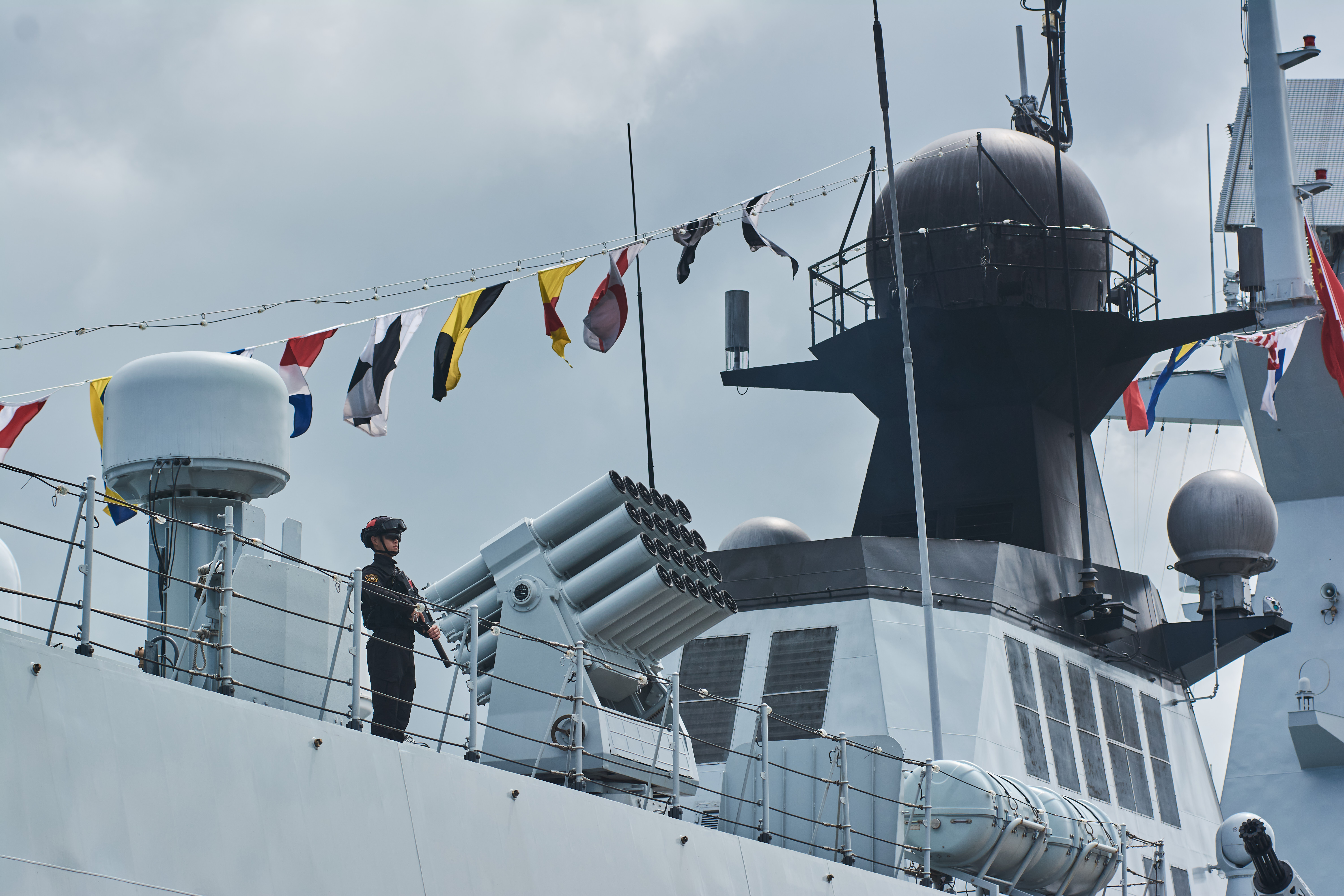
US couldn’t repair battle-damaged ships in war with China, study finds
Why this matters: an international story with cross-border implications worth tracking.
Battle-damaged U.S. warships could not be quickly repaired and returned to combat during a war with China, according to a new report.U.S. maintenance facilities would be overwhelmed and would lack sufficient spare parts to repair ships in theater, concluded the study by RAND, a Washington-based think tank. Nor can the U.S. Navy assume that its Pacific allies have adequate shipyard capacity — or political willingness — to fix damaged vessels.The U.S. Navy has struggled with overworked ships and crews, as well as overburdened shipyards and repair depots. But a war with China, which has the world’s largest navy, would almost certainly result in American ships being hit by everything from ballistic “carrier-killer” missiles, to hypersonic weapons and torpedoes, the study says.“The Navy has not faced damage at the level likely to occur in a major war since World War II,” warned RAND. The study recommended that command-and-control authority for repair work be streamlined, including prior agreements with allied nations regarding access to facilities. It also urged the U.S. Navy to expand its mobile repair capabilities, including “deployable repair teams, flyaway assessment units, and scalable Expeditionary Mobile Repair Facilities.”Barriers to repairsRAND’s analysis was based on a tabletop wargame conducted in August 2025. The setting was a hypothetical war with China, as U.S. ships race to defend Taiwan from invasion or blockade. The American vessels in question were Arleigh Burke-class destroyers, the backbone of the U.S. surface fleet.The U.S. Navy will need every ship it can get, including damaged vessels patched up and rejoining the fight. However, “existing Navy systems for battle-damage repair are burdened by a variety of inefficiencies that hinder the Navy’s capacity for responding to widespread battle damage,” the study warned. Analysts also found that “attempting repairs in a hostile Indo-Pacific environment will be significantly more complex than existing plans