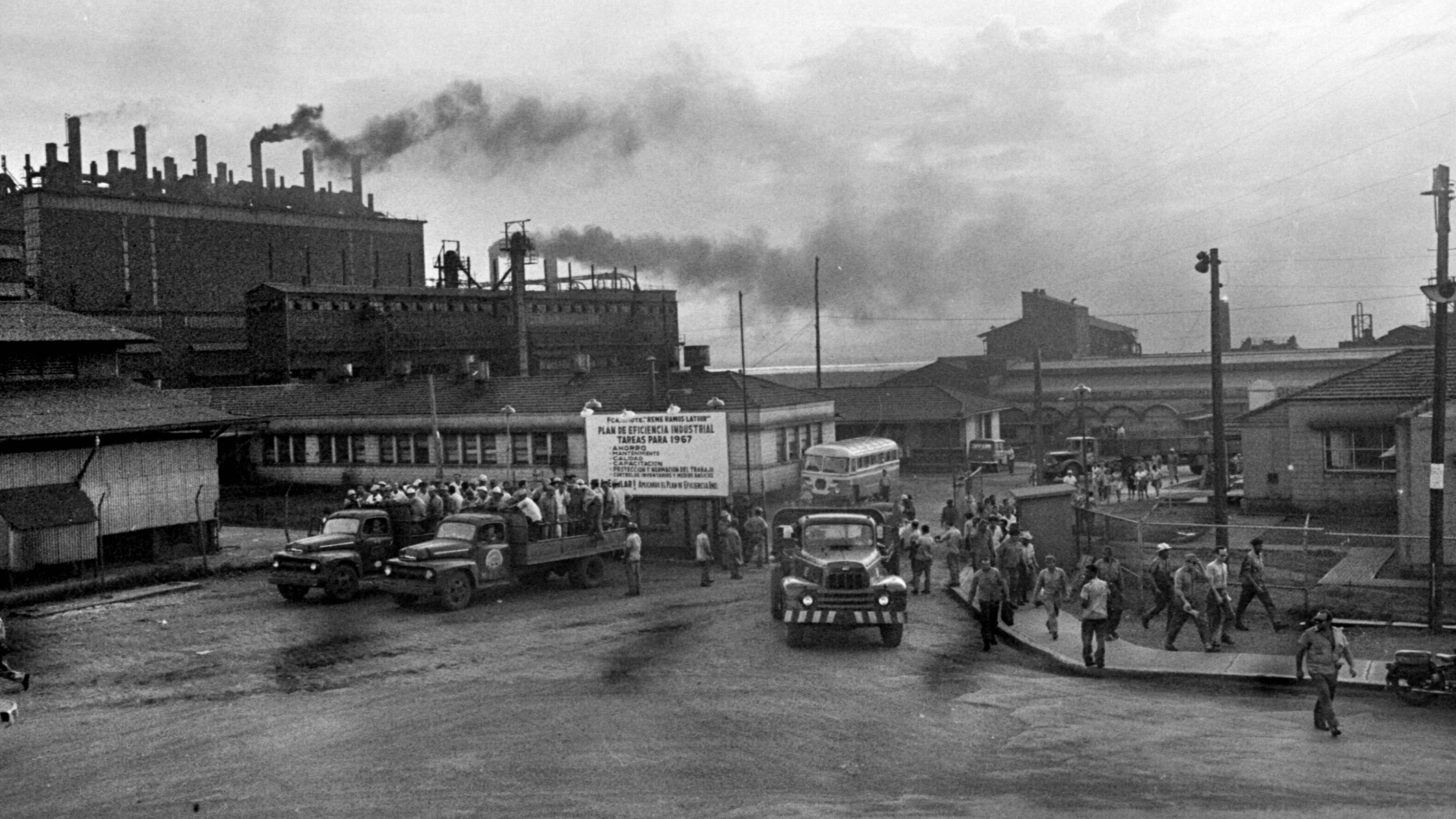
The Revolution’s Last Lifeline
In 1960, Washington watched aghast as Fidel Castro’s post-Revolution government seized companies and assets it viewed as the spoils of vanquished U.S. imperialism. Among the biggest prizes were two plants that sat above some of the largest nickel and cobalt deposits in the world. The United States had acquired one of them to secure a strategic supply of nickel for armor plating and aircraft engines during World War II. But the revolutionaries lacked know-how, and soon, the operations were struggling. “Cuban Mining Industry Virtually Destroyed in First Two Years of Castro Regime,” read a January 1961 New York Times headline, “PITS ARE CLOSED, FACTORIES SILENT.”The Cuban regime turned to its Cold War patron, as it did for so much else in its early years. Soviet engineers and mining specialists retooled the Nicaro plant and the Moa Bay nickel complex into pillars of the island’s economy and icons of Cuban sovereignty, funding power plants and social programs. After the Soviet Union collapsed, Castro sought a replacement savior closer to home in a 1994 deal with Sherritt International, a Canadian nickel and cobalt miner and refiner. Cuba provided the ore and labor. Sherritt brought capital, refining technology, and access to global markets.The U.S. tried repeatedly to sever that lifeline for Havana, including with a Bill Clinton–era law that barred any profits being recouped from property confiscated after the 1959 revolution. But the nickel and cobalt kept flowing. Nickel—raw or semifinished—was Cuba’s third-largest export in 2024, according to the Observatory of Economic Complexity, and China was the top recipient.Now the Trump administration has targeted those industries anew as part of its all-points campaign to overpower the post-Castro regime. Other elements of that drive have been deliberately attention-grabbing. The Justice Department recently indicted 94-year-old Raúl Castro, Fidel’s brother and successor, for the alleged downing of planes that killed three Ame