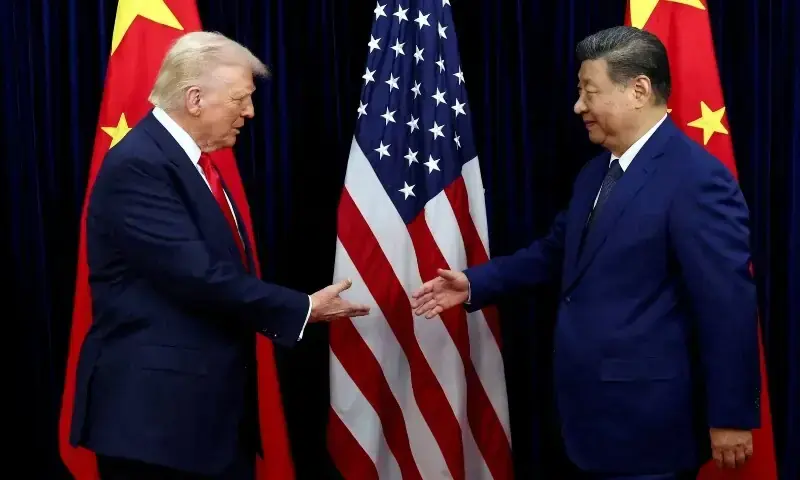
US-Iran conflict likely to dominate strategic calculations during Trump’s China visit
Why this matters: local context for readers following news across Pakistan and the region.
WASHINGTON: US President Donald Trump arrives in China on Wednesday for a three-day state visit that is expected to mainly focus on trade and economic ties. But, the US-Iran conflict is likely to dominate the strategic calculations of both Washington and Beijing. The May 13–15 visit — the first by a sitting US president to China in nearly nine years — comes at a moment when the world’s two largest economies are struggling to stabilise relations after months of tariff disputes, geopolitical rivalry and growing tensions in the Middle East. US President Trump is scheduled to hold one-on-one talks with the Chinese president, attend a state banquet and tour Beijing’s historic Temple of Heaven during the three-day visit. Yet behind the ceremonial optics lies a more urgent diplomatic objective: securing Chinese cooperation on Iran and the Strait of Hormuz crisis, which continues to disrupt global trade and energy markets. White House press secretary described the trip as a “visit of tremendous symbolic significance,” saying the president hoped to “deliver more good deals” during his stay in Beijing. The expected composition of the presidential delegation underscores that while economic diplomacy remains central to the visit, the US-Israeli war on Iran is reshaping its strategic context. Trump has invited senior executives from some of America’s largest corporations — including Elon Musk of Tesla, Tim Cook of Apple, Larry Fink of BlackRock and Kelly Ortberg of Boeing — signalling Washington’s intent to revive commercial engagement even amid geopolitical tensions. Executives from Citigroup and Qualcomm are also expected to participate in discussions on investment, manufacturing and technology cooperation. The trip had originally been planned for March or April but was postponed after the Middle East conflict intensified. Since then, the war has become an increasingly central factor shaping the US-China diplomacy. Washington is expected to press Beijing to use its considerabl