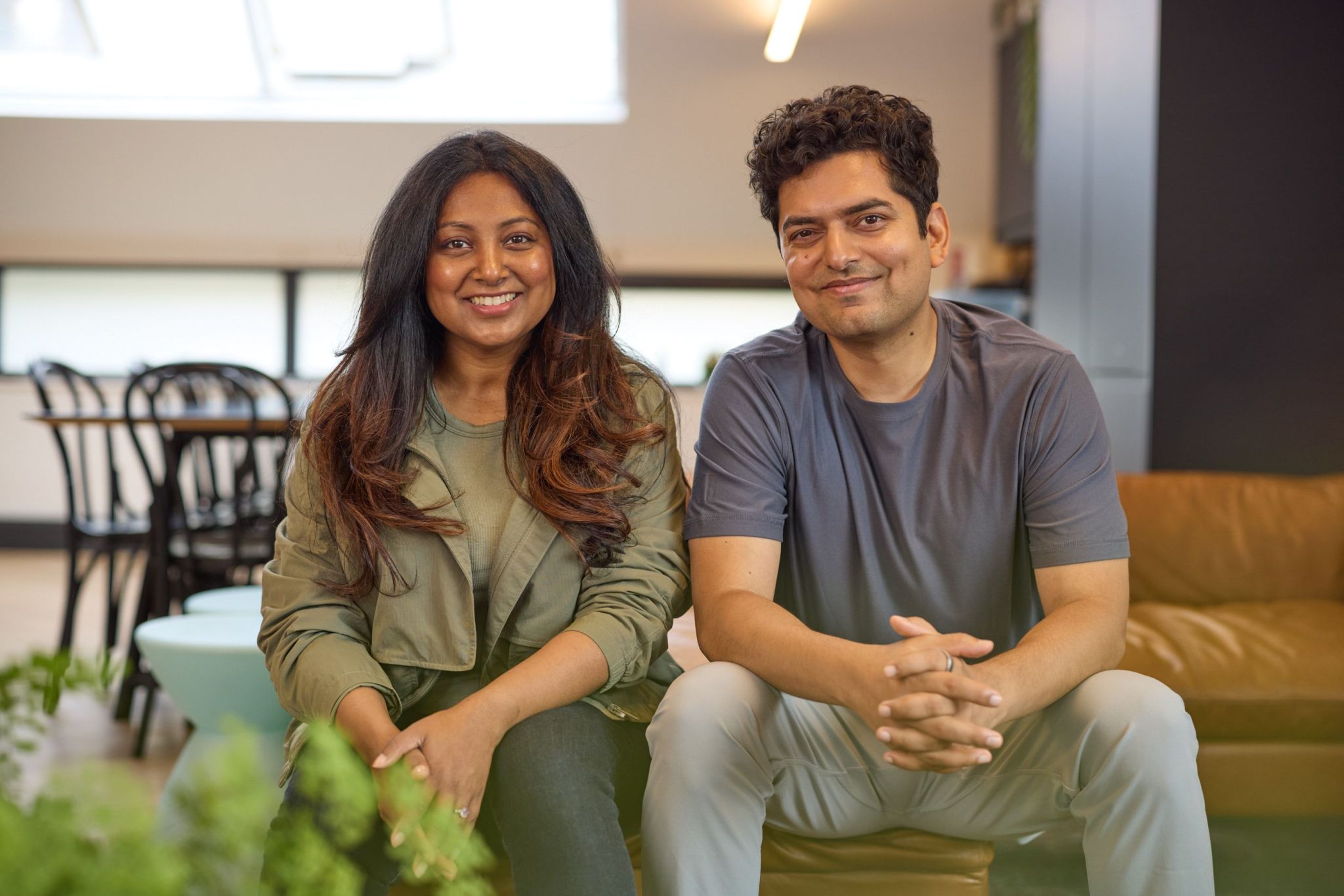
Exclusive: Apoha, a startup building AI models for creating new materials, emerges from stealth with $36 million Series A funding round
Apoha, a deep tech startup that is building AI models for creating new kinds of substances—from proteins to food products to paints—based on a new kind of data about how materials behave, is emerging from stealth today with $36 million in venture capital funding.The funding round, which is the London- and San Francisco-based startup’s Series A, is being led by European venture capital firm Singular, with participation from Draper Associates and continued backing from existing seed investors Redalpine, Seedcamp, Wilbe, and Nucleus. The company also has a grant from Innovate UK, the U.K.’s national innovation agency.The company did not disclose its valuation following the funding. Apoha is betting that the key to unlocking many new kinds of materials rests in a kind of data that does not exist yet at scale: measurements of the wave forms these materials generate when suspended in a liquid and then acted on by outside forces. It turns out that these warm forms are unique to each material and also correlate to its properties, including qualities such as smell and taste, as well as things like reactivity. With enough of this wave data, Apoha’s AI models will be able to suggest ways to modify or create a material in order to obtain the exact characteristics a user desires. Apoha calls this new AI method “liquid intelligence.” “Machines have learned to see what matter looks like and to read what we say about it,” Anshika Srivastava, Apopha’s cofounder and chief operating officer, said. Many AI models are trained only on text or on image data. “They have not learned to taste, smell, or feel matter—to perceive how a drug dissolves, how a flavour holds, how a material wears. That is the layer we are building.” Srivastava, a former Goldman Sachs banker, cofounded Apoha in 2021 alongside Shamit Shrivastava, a mechanical engineer who did post-doctoral research at the University of Oxford after completing a PhD at Boston University. Shriv