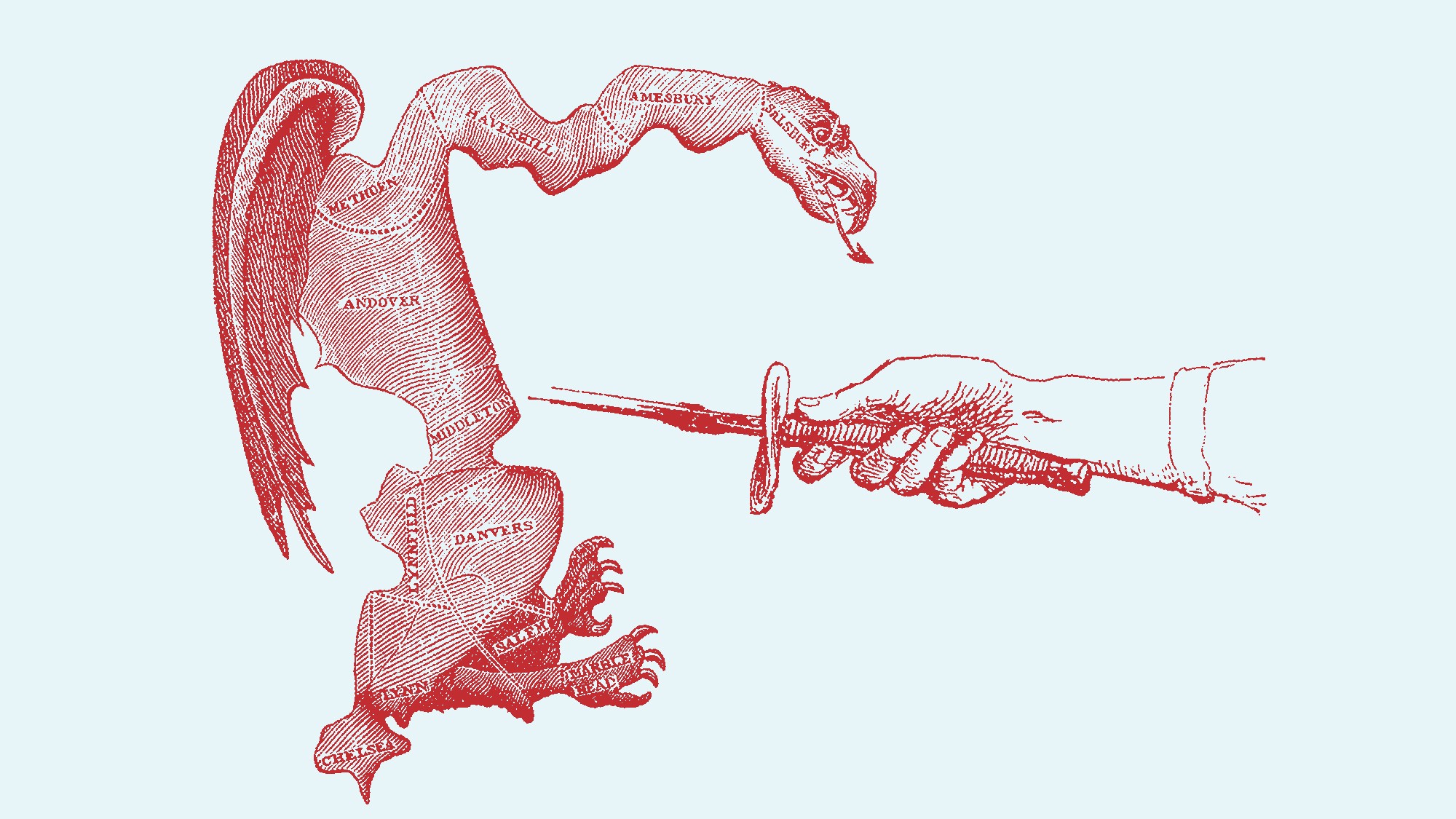
Welcome to the Golden Age of Gerrymandering
This is an edition of Time-Travel Thursdays, a journey through The Atlantic’s archives to contextualize the present. Sign up here.Not long after the original gerrymander took its monstrous shape in 1812, The United States Gazette issued a harsh prophecy. Massachusetts Governor Elbridge Gerry might otherwise have been forgotten to history but for the wicked practice that would come to bear his name. According to the paper, gerrymandering, “like the word mammoth, will probably be familiarly understood long after the filthy beast to which it is applied, shall become extinct.”As political predictions go, it was a good one. In 2026, the political map is crawling with newborn filthy beasts. Last year, at the direction of President Trump, the Texas state legislature gerrymandered its districts to give Republicans an edge in the House elections. More red states followed suit, triggering redrawn maps in blue states. In April, the Supreme Court’s Callais decision to block a majority-Black district in Louisiana effectively ended the Voting Rights Act’s requirement for majority-minority districts, opening the door to further gerrymanders across the country.We are entering gerrymandering’s golden age. The situation is extreme, but it’s not exactly new. Gerrymandering and other forms of skullduggery—“all the frauds and tricks that go to make up the worst form of practical politics,” as John Bach McMaster put it in an 1895 Atlantic essay—are as old as the Republic. No sooner had James Madison helped see through the ratification of the Constitution than his fellow Virginian Patrick Henry tried to district him out of a congressional seat. In other instances, Americans have repeatedly tried to solve problems of representation through districting, but reforms meant to curb unfairness have created new opportunities for manipulation. We’ve become so accustomed to thinking about the district as the core form of representation that we have difficulty imagining any alternative.One looks mo