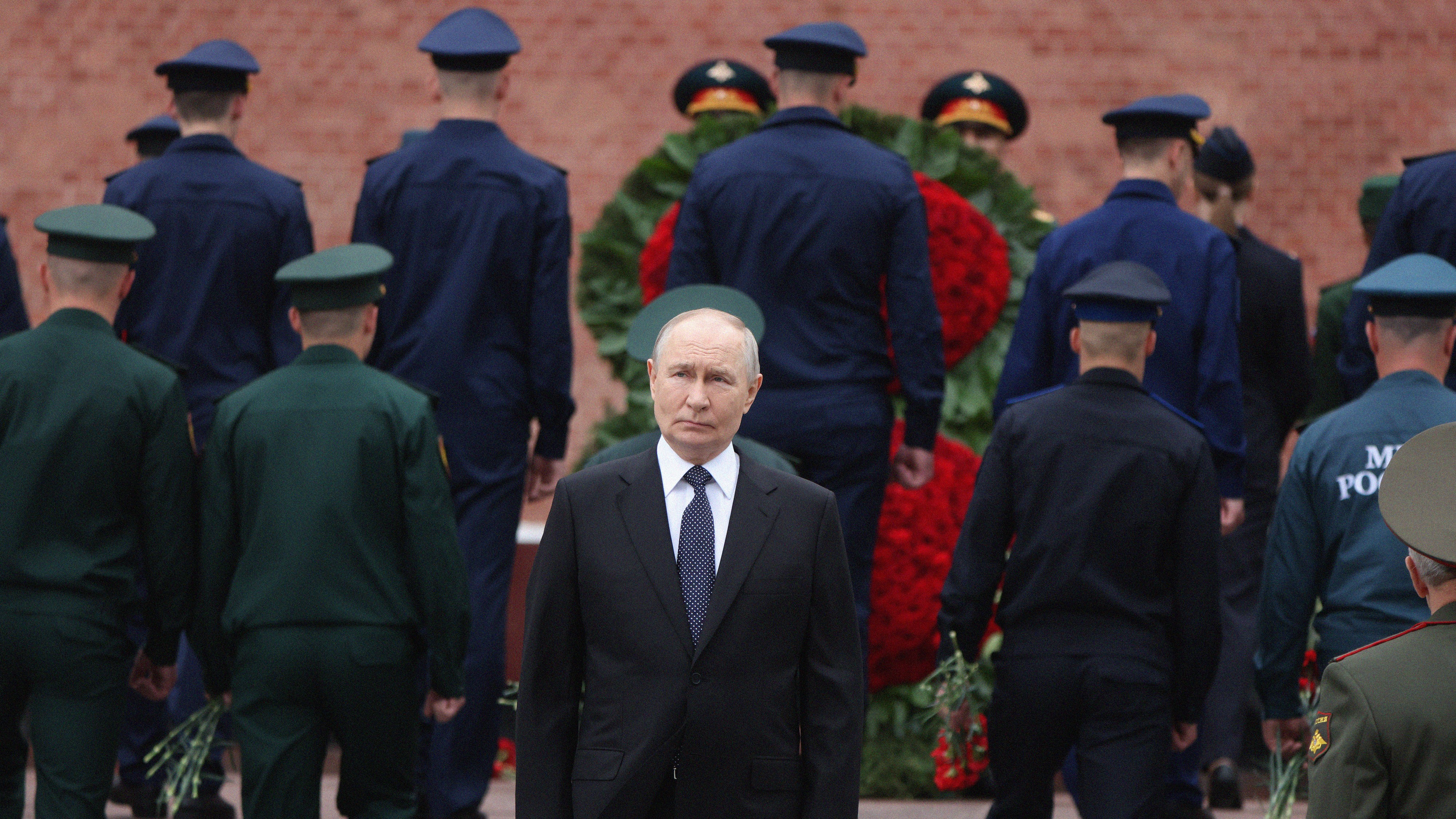
The Dictator in His Labyrinth
When things get dicey in Moscow, Vladimir Putin tends to drop out of sight for a while, retreating to one of his residences and canceling public events. Only his closest aides know how he spends his time during these absences, which can go on for days even in the middle of a national crisis. The Kremlin does its best to fill the vacant airtime on state TV with pretaped footage of the president, waiting for him to reemerge and declare that everything remains under his control.Since the end of last year, when Ukraine intensified its campaign of drone and missile strikes on Russian cities, Putin has taken a few of these breaks. Two of them lasted for more than a week. He has mostly avoided talking about the Ukrainian strikes, even as they caused fuel shortages across Russia, destroyed infrastructure, and shattered the sense of stability that Putin offers his people in exchange for their loyalty. His first detailed response to the threat came on Monday, and he did his best to seem unmoved.In a carefully scripted interview on state TV, Putin looked bored with the details of governing Russia and managing the frustrations of his citizens, but he did not appear tired of his war in Ukraine. He spent most of the 19-minute conversation with a Russian news anchor dissecting the minutiae of the fighting, even naming a particular street in one small town in the region of Donetsk where, according to Putin, his forces had managed to gain a bit of ground. The performance seemed designed to suggest that, away from the cameras, the Russian leader spends his time hunched over maps of the battlefield.The Russian people, by contrast, have run out of patience with the war their leader seems so eager to continue. A survey released on the same day as Putin’s interview found that 81 percent of Russians want the war to end “as early as tomorrow.” The number of respondents who want the fighting to continue until Russia’s victory, no matter how long it takes, dropped in the survey to 9 percent,