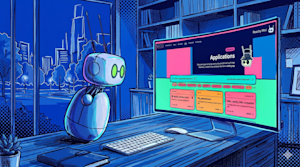
The app store for robots has arrived: Hugging Face launches open-source Reachy Mini App Store with 200+ apps
Why this matters: a development in AI with implications for how people work, create, and decide.
There's an app for nearly every imaginable user and use case these days, but one thing they all have in common is that they're centered around one device: the smartphone.That changes today as Hugging Face, the 10-year-old New York City startup best known for being the go-to place online to host and use cutting-edge, open-source AI models, agents and applications, launches a new App Store for Reachy Mini, its low-cost ($299) open-source physical robot that debuted back in July 2025 (itself the fruit of Hugging Face's acquisition of another startup, Pollen Robotics). The new Hugging Face Reachy Mini App Store already hosts a library of over 200 community-built applications, and Reachy Mini owners will be able to download any of these free of charge to start (unlike smartphone apps, there's no monetization option for app creators on this store — yet). The Reachy Mini App Store will also offer Reachy Mini owners — around 10,000 units have been sold so far since last year — an easy means of building their own custom apps for the tiny, stationary desktop robot with built-in camera eyes, speaker, and microphone, via Hugging Face's existing, AI-powered agent called "ML Intern."The significance lies not just in the hardware, but in the removal of the "roboticist" barrier; for the first time, individuals without a background in engineering or coding are shipping functional robotics software in under an hour."Anyone can build the apps," said Clément Delangue, CEO and co-founder of Hugging Face, in a video interview with VentureBeat. "My intuition is that more and more [AI] model builders will release on Reachy Mini as a way to test the robotics ability of new models." Make robots as accessible to laypeople as PCs and smartphonesThe technical bottleneck in robotics has historically been the scarcity of high-quality training data. While Large Language Models (LLMs) have mastered general-purpose coding by training on massive repositories like Microsoft&#x