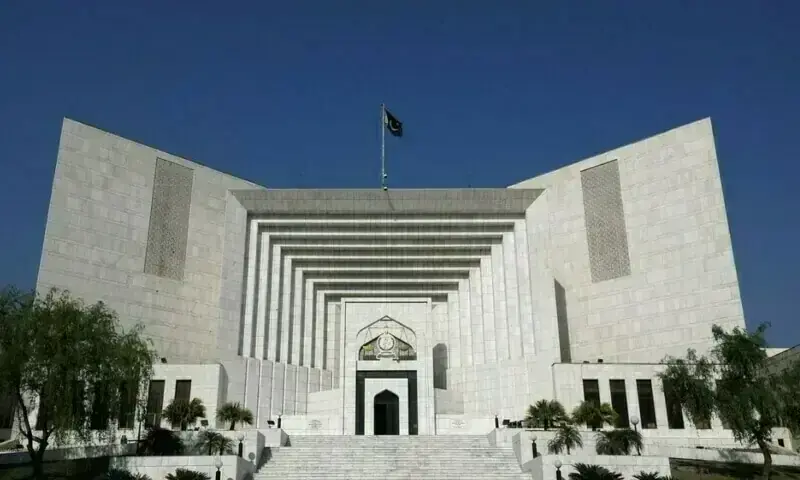
Women’s inheritance rights enshrined in Sharia, Supreme Court holds
Why this matters: local context for readers following news across Pakistan and the region.
ISLAMABAD: The Supreme Court on Wednesday settled a 71-year-old family dispute, ruling that inheritance is a vested Sharia (Islamic) and legal right that devolves upon all heirs, including women, immediately upon the death of the family head. The court held that this right cannot be defeated through private arrangements, social pressure, dubious revenue entries or procedural manoeuvres. “The right of inheritance is not a bounty to be bestowed at the pleasure of male family members, nor a concession dependent upon custom, convenience or familial goodwill,” Justice Shahid Bilal Hassan observed while setting aside the Jan 26, 2017 judgement of the Lahore High Court’s Bahawalpur bench. The dispute arose after Roshan, the owner of the suit property, died in 1955. Inheritance Mutation No. 74 was entered on April 4, 1955 in favour of his legal heirs. On the same day, Mutation No. 75 was recorded on the basis of an alleged verbal gift purportedly made by the widow and daughters in favour of the deceased’s two sons. Justice Shahid Bilal Hassan notes law favours protecting interest of female heirs The petitioners maintained that no such gift had ever been made and that Mutation No. 75 was fraudulently sanctioned to deprive the female heirs of their lawful shares. After retaining possession of the property, the sons and their successors transferred it through exchange mutations and gift deeds in favour of their descendants. The petitioners filed a suit seeking a declaration that Mutation No. 75 was illegal. The trial court dismissed the suit, while the appellate court and the LHC also upheld the decision. Allowing the appeal, the SC declared Mutation No. 75 illegal, void and ineffective against the petitioners’ inheritance rights. It held that they were entitled to their respective shares in Roshan’s estate under the applicable law of inheritance. The SC also directed the revenue authorities to correct the revenue record and complete the determination and separation of the he