NASA’s Chandra Examines Milky Way at Arms’ Length
Why this matters: new research or scientific developments with potential real-world impact.
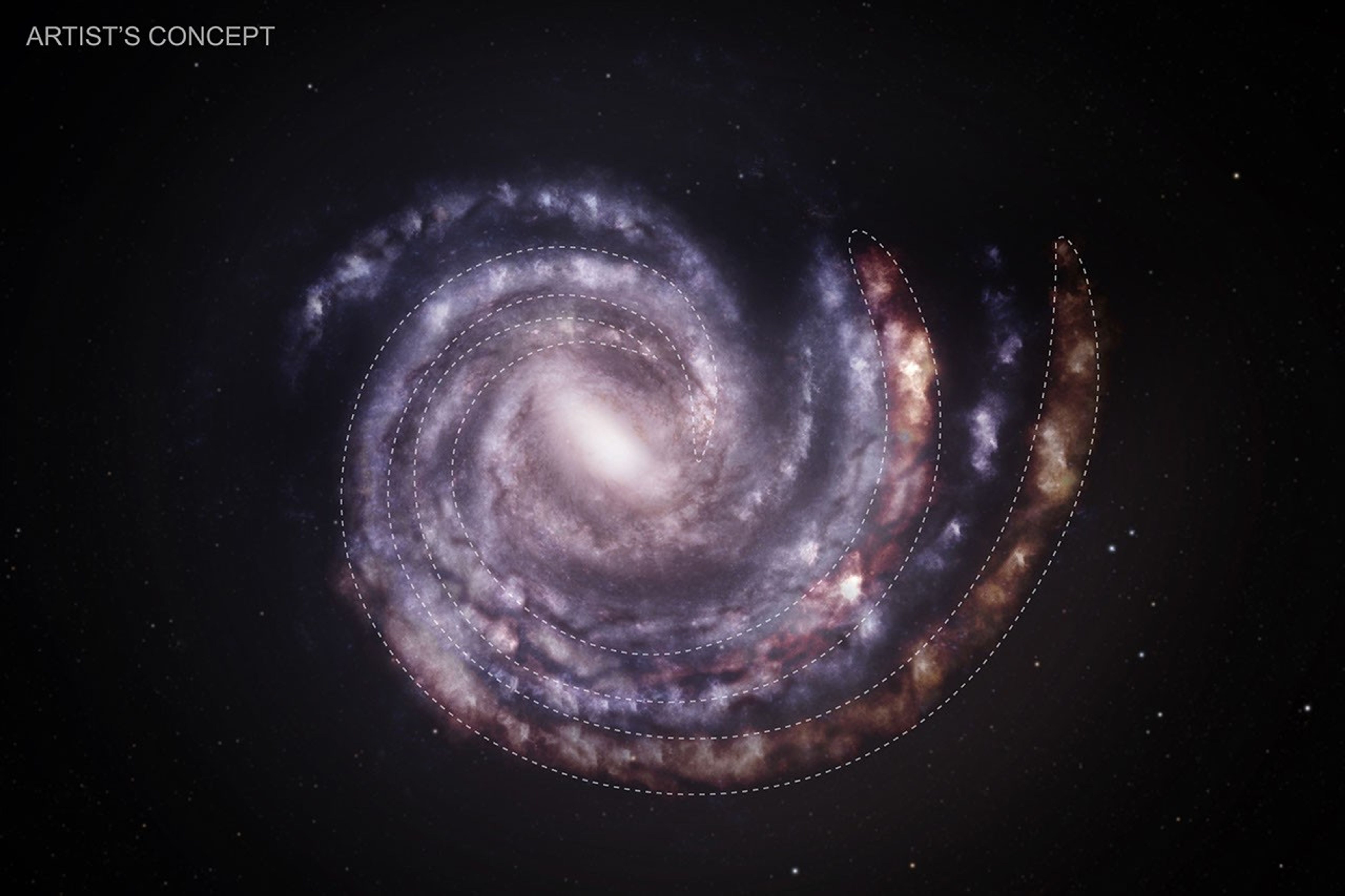
This sequence begins with an artist’s concept showing the Milky Way galaxy as seen from above, with the estimated positions of spiral arms based on previous data. Next is an updated artist’s concept of the Milky Way, where the positions of the two spiral arms most distant from the center of the galaxy have been adjusted based on newly processed X-ray data from NASA’s Chandra X-ray Observatory and ESA’s XMM-Newton. Both arms may be more distant than previously thought. NASA/CXC/A. Hobart A new result using NASA’s Chandra X-ray Observatory shows that the outer spiral arms in the Milky Way galaxy may reach wider than previously thought. This finding may lead astronomers to adjust their understanding of our home galaxy’s structure. A team of astronomers made this discovery by making precise measurements of distances to dust clouds in the Milky Way’s spiral arms using data from both NASA’s Chandra and XMM-Newton, an ESA (European Space Agency) mission with NASA contributions. The results are described in a new paper published Wednesday in the Astronomy & Astrophysics journal. The researchers determined the distances by studying rings around gamma-ray bursts, some of the brightest bursts of light in the universe, which arise from the collapse of massive stars or the merger of neutron stars. They are located at enormous distances, well beyond the confines of our galaxy. An artist’s concept showing the Milky Way galaxy as seen from above, with the estimated positions of spiral arms based on previous data, in blue. Overlaid on this is an updated view of the Milky Way showing different positions for the two outermost spiral arms, shown in red and bordered by dashed lines. Both arms may be more distant than previously thought, based on newly processed X-ray data from Chandra and XMM. NASA/CXC/SAO/M.Weis