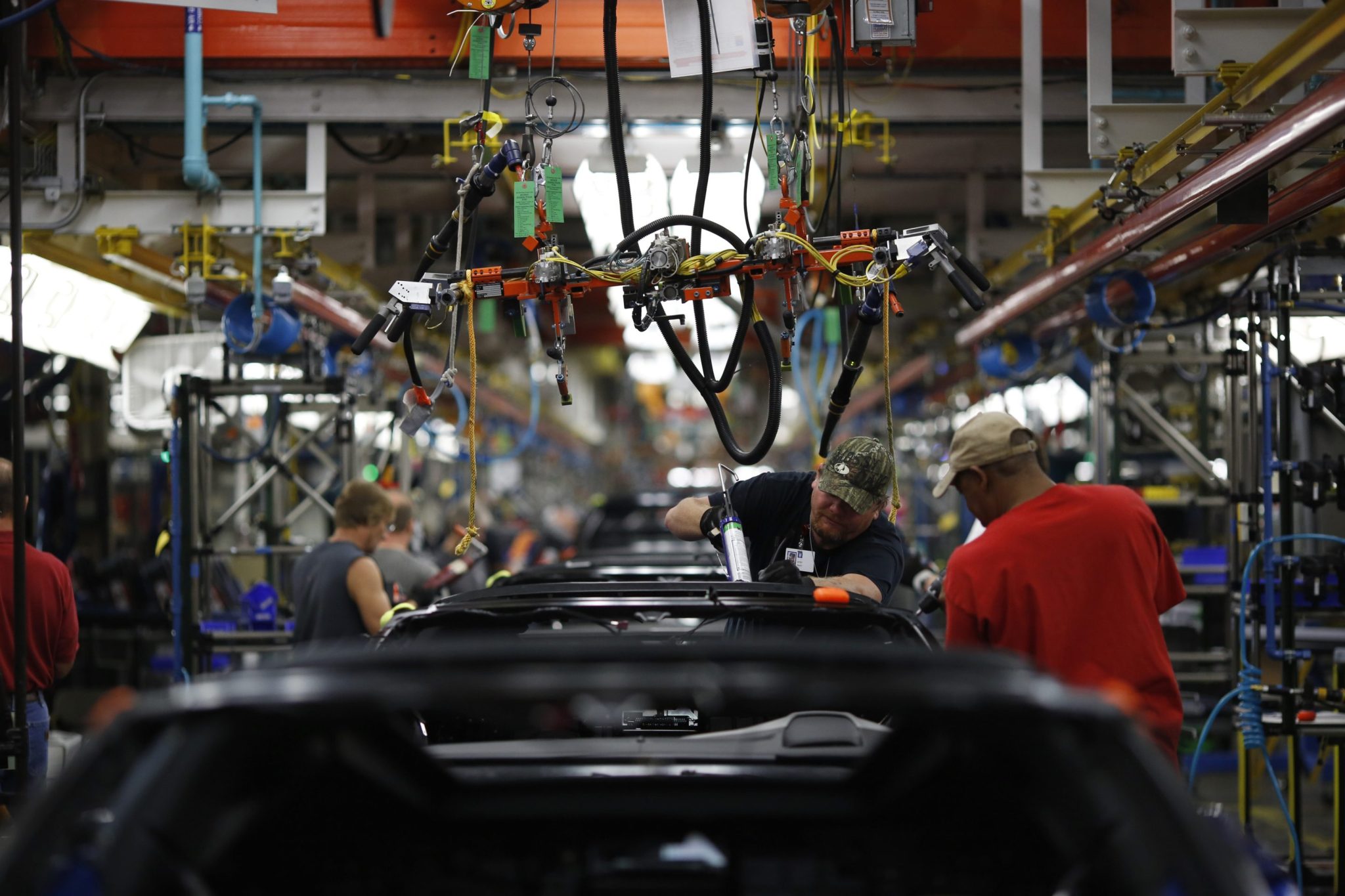
The U.S. auto industry went from global hegemon to running a $3.3 trillion trade deficit with the world: ‘That’s not acceptable’
It would hardly be an understatement to say the U.S. auto industry has historically been one of the country’s primary economic growth engines. The assembly line of the Model T days would go on to permanently reshape manufacturing work, and transportation infrastructure and cities were built around Americans’ unrelenting car-centric culture. But despite its outsized role in the 20th century U.S. economy, the nation’s once-unmatched auto industry is now struggling to keep up with global competitors. And it’s not just carmakers who are smarting. If the U.S. auto industry’s decline proves permanent, the country’s national and strategic security could be at risk, too. Carmaking represents an “enabling industry,” according to a report documenting the state of the U.S. auto sector released Monday by the Information Technology & Innovation Foundation (ITIF), a think tank focused on science and technology policy. The sector occupies a central role in the country’s manufacturing and innovation ecosystem, to the extent that it underpins industrial capacity and expertise in the production of defense goods and dual-use technologies, according to the report. But U.S. carmakers have largely ceded the title of automotive innovators-in-chief to global competitors, particularly China, which leads the world in motor vehicle production, as well as exports. As China barrels ahead to dominate the global auto market and lead in electric vehicle production, the U.S. industry could retreat into an even more diminished role, according to the report, risking falling further behind in a crucial front of its competition with China. “The United States must act, and act now” Stephen Ezell of ITIF, one of the report’s co-authors, said in a statement. “The United States can still rebuild auto competitiveness if it treats the sector as what it is: a strategic industry tied directly to national power.” Decline of a kingpin The numbers behind the U.S. carmaking’s faltering competitiveness and global p