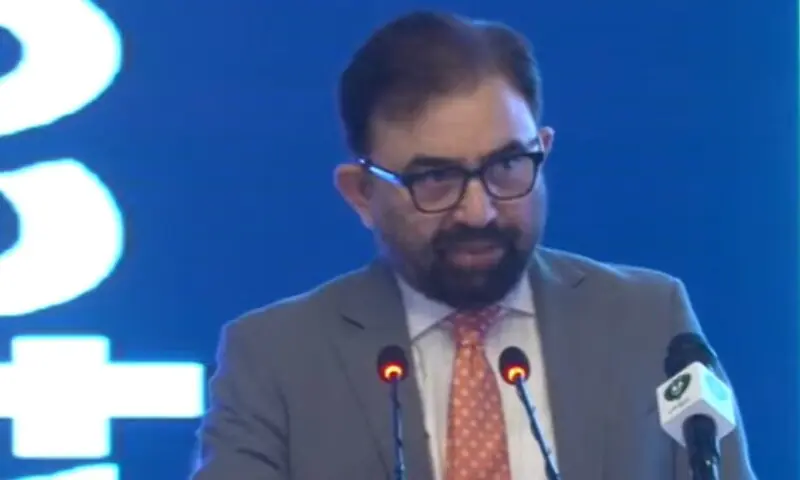
Indus commissioner says he wrote to Indian counterpart 4 times over Chenab fluctuations, but no reply so far
Why this matters: local context for readers following news across Pakistan and the region.
Pakistan Commissioner for Indus Waters Syed Muhammad Mehar Ali Shah said on Tuesday that he had written to his Indian counterpart regarding fluctuations in the flow of the Chenab River four times since last April — when New Delhi unilaterally decided to hold the Indus Waters Treaty in abeyance — but there had been no response thus far. Speaking at a seminar held in Islamabad to highlight the legal and constitutional framework of the IWT, he said he last wrote to his Indian counterpart last night over “significant fluctuations” in the flow of the River Chenab. The IWT allocates the eastern rivers — Ravi, Beas and Sutlej — to India, while the western rivers — Indus, Jhelum and Chenab — are largely allocated to Pakistan. The 1960 water-sharing agreement has also established mechanisms for data-sharing and dispute resolution. The Indus Waters commissioner said the fluctuation in the Chenab was not a “technical inconvenience, but rather a strategic hazard”. “There is no brainer in understanding that data-sharing is the line between natural risk and manufactured vulnerability,” he said, adding that India should answer for the fluctuations in the Chenab flows. “I will state this carefully and without overclaiming causation. These events required explanation and operational data, and we have been asking India through treaty channels, but there is no response from the Indian side, and no response creates a risk,” he said. He said that no “responsible” downstream commissioner would look at the fluctuation as “routine and move on”. “These are precisely the events the Indus Water Commission exists to examine,” he added. He further said that Pakistan, in the past year, had tried to keep the channel of communication and data-sharing under the IWT active despite India holding the treaty in abeyance. “Pakistan continued to provide the required data, sent correspondents, requested meetings, inspections, project information and [held] Article 9 consultations,” he said; however, he ad