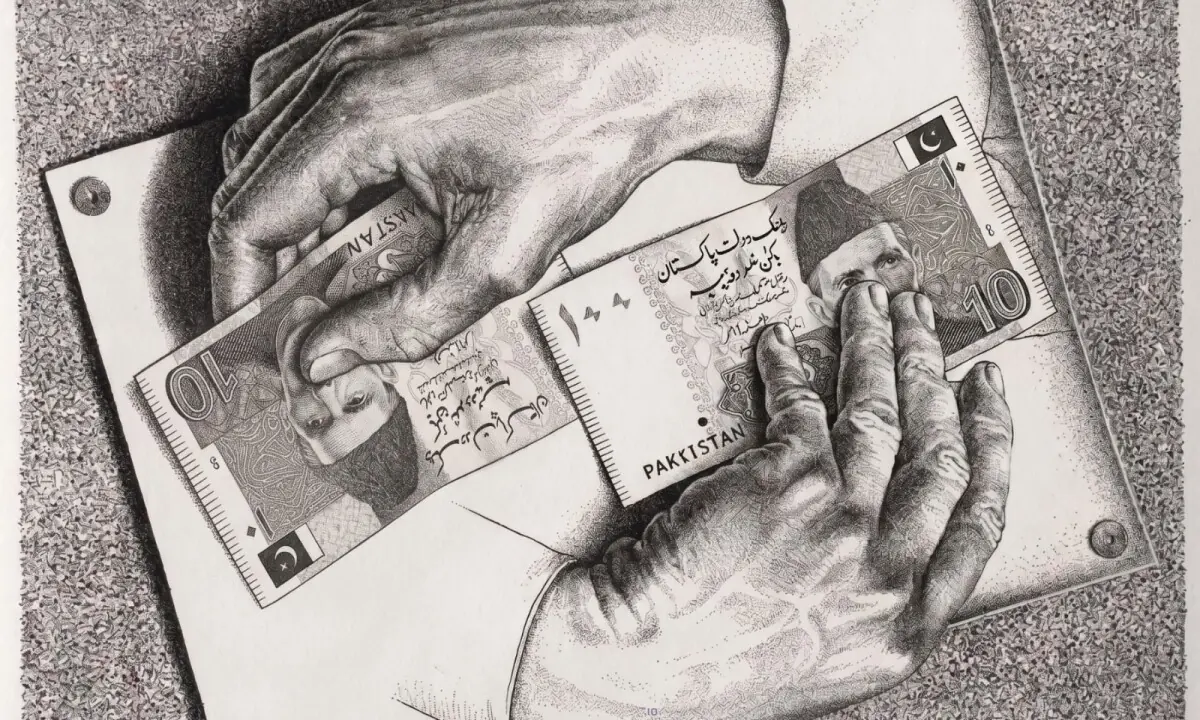
Pakistan’s quarter-century Ponzi scheme, and the exit that has no architecture
Why this matters: local context for readers following news across Pakistan and the region.
Long before credit rating agencies existed, there was a simpler test of financial health: can a borrower pay interest from their income, or by borrowing more money? American economist Hyman Minsky gave the failed rating a name: Ponzi finance. And it is worth being precise about it. A Ponzi position is not high debt, or even rising debt. It is the specific condition in which you are paying your interest by borrowing more money. Pakistan has run Ponzi finance for a quarter of a century. From the late 2000s until two years ago, our budgets were in constant loss because we were spending more than we were earning each year, before deducting what we had to pay in interest on loans. Each rupee in interest payments on the national debt was paid with a freshly borrowed rupee, and then some more. Pakistan’s debt-to-GDP ratio rose every single year from 2012 to 2023, going from 58 per cent of GDP to over 82pc (except for 2021 when we received Covid-19 relief). Our burden of interest peaked in the year to June 2024, when it ate into sixty-one paisas of every rupee the government earned. This essay makes three claims. First, that the Ponzi scheme never collapsed, for reasons that are uncomfortable rather than reassuring. Second, the past two budgets made the first genuine attempt to exit since the turn of the century. Third, the heart of the matter, that the gains are financial but not institutional: we have interrupted the machine that produced the Ponzi without replacing it, and the new budget shows the old incentives still running underneath. Why Pakistan’s Ponzi scheme never collapsed A private Ponzi scheme dies when new money stops arriving. A sovereign one does not die, because the state has three instruments no private schemer possesses, and over the past decade, we used all three. The first is a captive lender base. Most of our domestic debt is held by our own banks, which fund those holdings substantially through liquidity from the State Bank of Pakistan (SBP, our centr