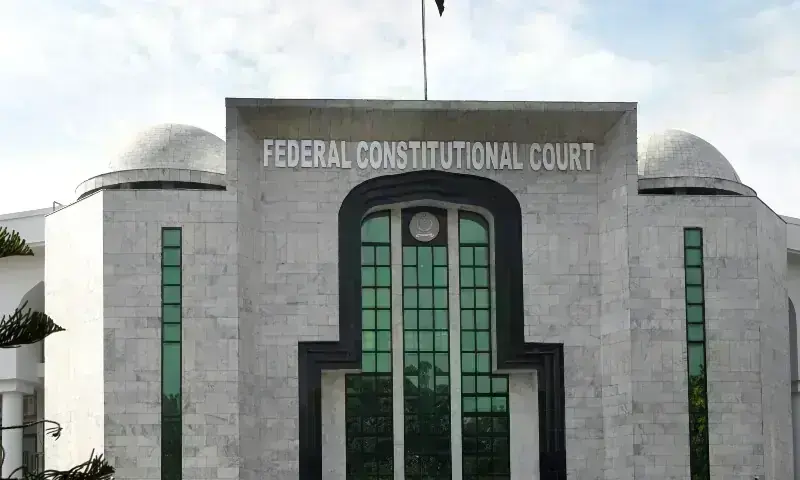
FCC lays down safeguards to protect women’s inheritance rights
Why this matters: local context for readers following news across Pakistan and the region.
ISLAMABAD: In a landmark ruling reaffirming the inviolable inheritance rights of women, the Federal Constitutional Court (FCC) on Wednesday developed comprehensive safeguards requiring courts dealing with the enforcement of women’s inheritance rights to exercise heightened vigilance and judicial scrutiny. Authored by FCC Chief Justice Aminuddin Khan, the bench ruled that courts, revenue authorities and other forums entrusted with the adjudication, recognition or enforcement of inheritance rights, particularly those concerning female legal heirs, must ensure compliance with the principles formulated by the court while examining any compromise, relinquishment, family arrangement, settlement, gift, mutation, consent statement or other instrument that affects, curtails, compromises or extinguishes the inheritance rights of women. The FCC bench, also comprising Justice Ali Baqar Najafi, heard an appeal filed by Bibi Amina and set aside the June 25, 2025, Balochistan High Court (BHC) judgement that had upheld a compromise agreement effectively disinheriting two sisters. The dispute arose from a suit filed by the petitioners, daughters and legal heirs of the late Abdul Rehman, including Bibi Sabza, against their brothers. They sought a declaration and separate possession of their respective Sharia shares in the estate left by their deceased parents. Courts must conduct heightened scrutiny of deals affecting female heirs, CJ rules During the pendency of the suit, a written compromise was purportedly reached between the parties, as a result of which the trial court passed a judgement on June 15, 2021, under Order XXIII Rule 3 of the Code of Civil Procedure, 1908 (CPC). The petitioners later filed an application under Section 12(2) of the CPC, alleging that the compromise had been procured through fraud, misrepresentation and concealment of material facts, and that their consent was neither free nor informed. The trial court allowed the application on Nov 8, 2022, setting asi