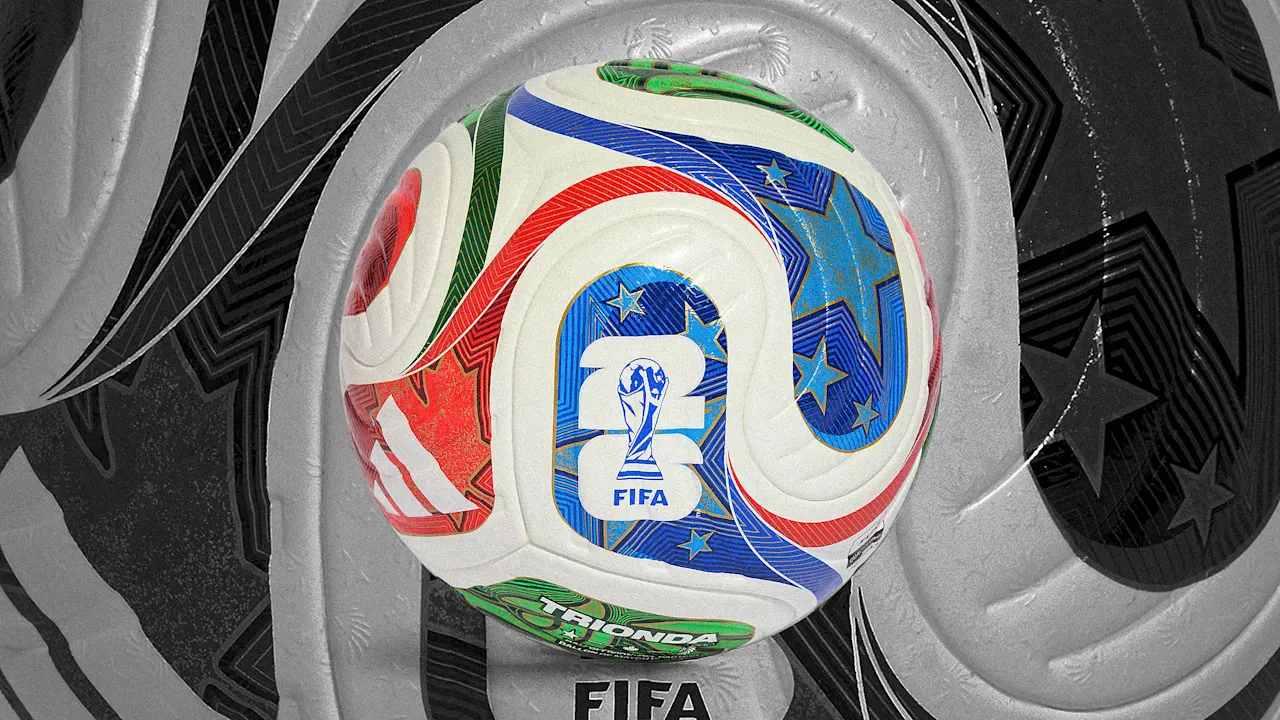
This year’s FIFA World Cup is getting a new piece of equipment by Adidas
Every four years, the men’s World Cup delivers some certainties. The pitch dimensions are tightly regulated, offside is signaled with a flag, and referees end the match with a blast of a whistle. But one key piece of equipment is changed on purpose: the ball. Adidas, which has supplied World Cup soccer balls since 1970, introduces a new match ball for every tournament, and with that comes fresh aerodynamic calculations for players. How will it fly through the air, weave and dip? For the past 20 years, my engineering colleagues in Japan and England and I have put the new balls through their paces, investigating soccer ball aerodynamics. Our work begins by putting balls in wind tunnels to measure drag, side and lift forces. We use the measurements from these tests in trajectory simulations that tell us how the ball will behave in a real-game setting. Putting the 2026 World Cup ball through the wind tunnel test. That may all sound a little academic, and we do produce an academic paper on our findings. But what our data indicates could mean the difference between a goal or a miss for strikers, a save or a blunder for goalkeepers, and jubilation or heartache for fans. At the World Cup, the ball is the most important piece of equipment in the biggest tournament of the world’s most popular sport. This year’s ball, the Trionda, is especially interesting. When FIFA and Adidas unveiled it in fall 2025, the first thing many people noticed was the color and the paneling. Earlier World Cup balls used many panels; modern balls use far fewer. [Photo: Manfred Rehm/picture alliance/Getty Images] The ball’s red, blue and green graphics correspond to the three host countries, with maple leaf, star and eagle motifs representing Canada, the United States and Mexico. And for the first time in men’s World Cup history, matches will be played with a four-panel ball. But with so few panels, has Adidas made the ball too smooth? That is the trap engineers fell into with the Jabulani ball used