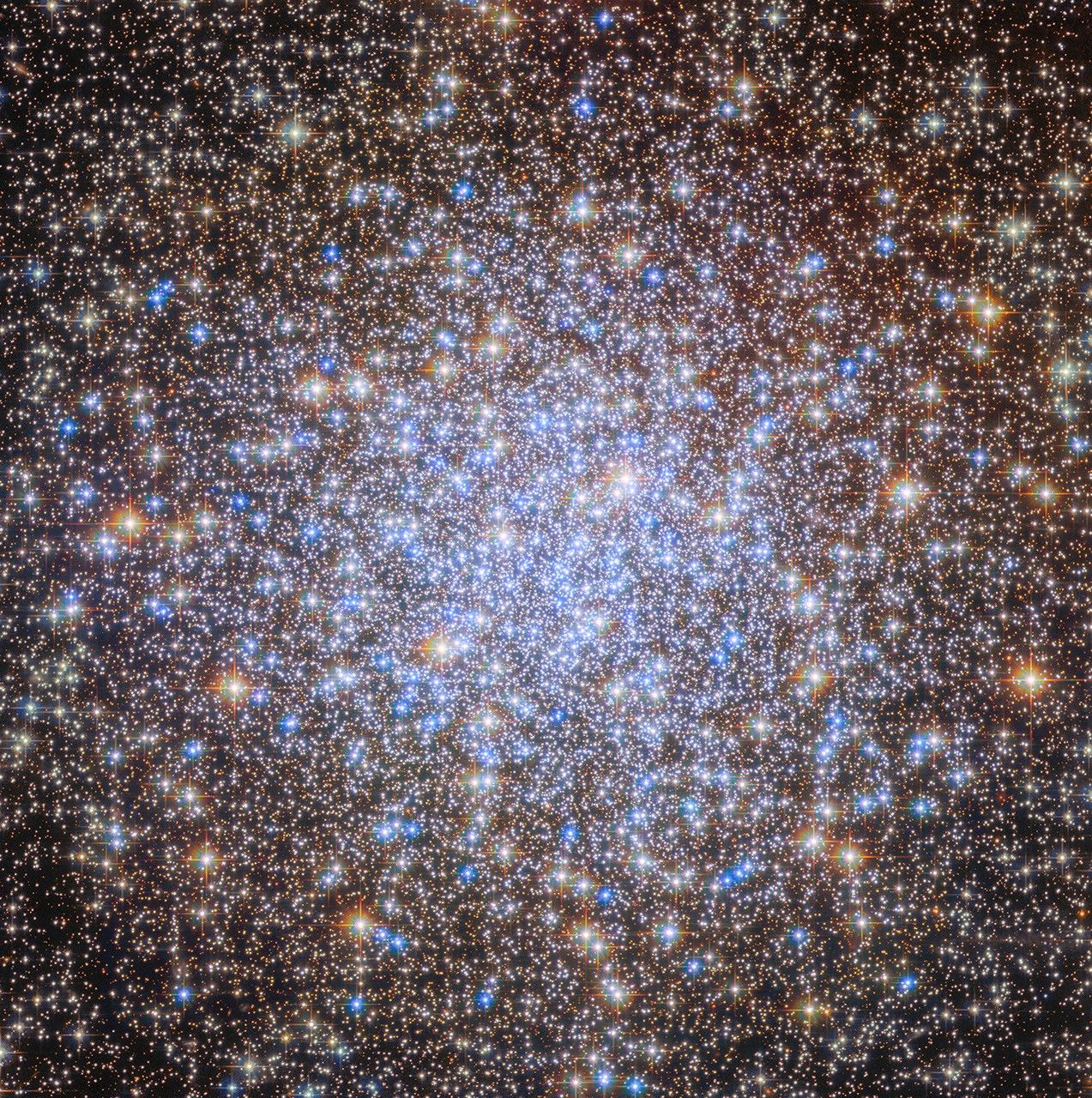
Starry Chandelier Cluster
Why this matters: new research or scientific developments with potential real-world impact.
ESA/Hubble & NASA, A. Sarajedini, G. Piotto. This image released on June 26, 2026, features the globular cluster NGC 6723, sometimes called the Chandelier Cluster. Like its namesake, it sparkles with countless lights. However, each ‘lightbulb’ in this chandelier is an individual star 27,000 light-years away in the constellation Sagittarius (the Archer). Globular clusters like NGC 6723 contain some of the oldest stars in our galaxy. These clusters have ages that often exceed 10 billion years old, and some are nearly as old as the universe itself. Astronomers think globular clusters are some of the first structures that formed in our galaxy, coalescing potentially billions of years before the thin disk of stars in which our Sun orbits. The details of how globular clusters formed, however, are not yet certain. Learn more about the Chandelier Cluster. Image credit: ESA/Hubble & NASA, A. Sarajedini, G. Piotto