NASA eClips and GLOBE Educators Strengthen a Regional STEM Ecosystem in Coastal Virginia
Why this matters: new research or scientific developments with potential real-world impact.
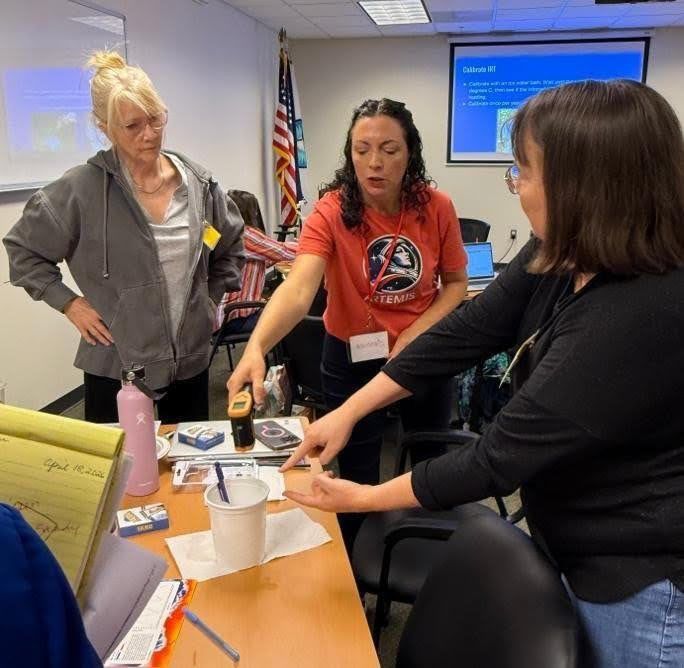
Explore This Section Science Science Activation NASA e Clips and GLOBE… Overview Learning Resources Science Activation Teams SME Map Opportunities More Science Activation Stories Citizen Science Science Activation Opportunities 3 min read NASA e Clips and GLOBE Educators Strengthen a Regional STEM Ecosystem in Coastal Virginia Jessica Taylor, Physical Scientist at NASA Langley Research Center and Principle Investigator for GLOBE Clouds and the My NASA Data project, explains calibration of an infrared thermometer. Thirty-eight science educators representing seven school districts across Virginia’s Tidewater region joined forces with community organizations, such as the Elizabeth River Project, to deepen their instructional practice through a dynamic collaboration between NASA eClips and the GLOBE (Global Learning and Observation to Benefit the Environment) Program. Together, these groups are cultivating a regional STEM ecosystem that connects classrooms, community science, and NASA resources in meaningful and lasting ways. As part of NASA’s Science Activation Program, NASA eClips engages educators and learners with standards-aligned resources grounded in authentic NASA science. Complementing this work, the GLOBE Program empowers participants to contribute to citizen science through environmental data collection and analysis. The partnership between these two programs creates a powerful bridge between content knowledge and real-world application – bringing Earth Systems science to life for both educators and learners. Educators gathered for a three-hour professional learning experience on March 7 or April 18, 2026 at the National Institute of Aerospace in Hampton, Virginia. Through hands-on investigations, participants explored how land cover influences surface temperature, how clouds impact atmospheric conditions, and how soil plays a critical role in environmental systems. These experiences were anchored in NASA eClips resources and GLOBE protocols, offering practical