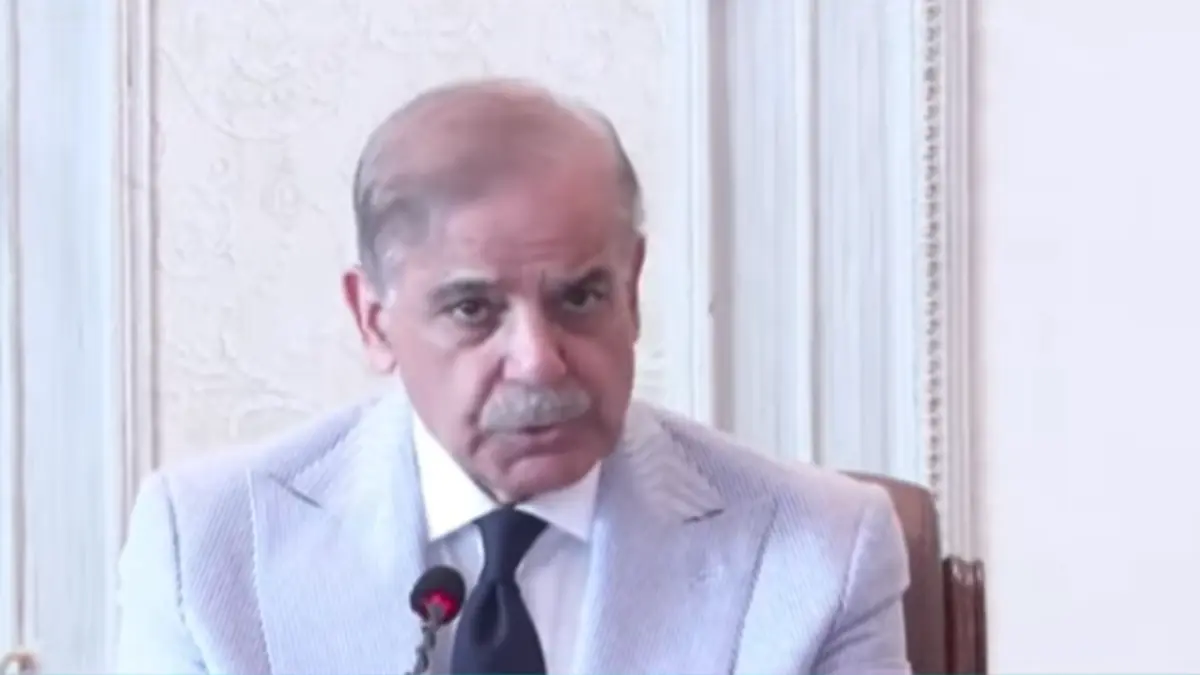
PM Shehbaz calls for efforts to turn Pakistan into an 'economic power'
Why this matters: local context for readers following news across Pakistan and the region.
Prime Minister Shehbaz Sharif said on Thursday just as Pakistan had emerged as a nuclear power, efforts were now needed to turn it into an economic power. The premier expressed these views while addressing a federal cabinet meeting in Islamabad, where he also spoke about May 28. On May 28, 1998, Pakistan joined the ranks of nuclear powers after atomic tests in the hills of Chagai, Balochistan. In his address, PM Shehbaz said on that day, Pakistan gained a power that would remain a “defensive asset” of the country. “It is our national narrative that this asset is for defence, not offence. And this is the reason that the world knows Pakistan as a responsible nuclear power,” he added. The premier then paid tribute to all “heroes” who contributed to efforts for making Pakistan a nuclear power, particularly mentioning late prime minister Zulfikar Ali Bhutto and former prime minister and PML-N supremo Nawaz Sharif. “[The initiative’s] founder was Zulfikar Ali Bhutto and my leader, Nawaz Sharif, saw it to completion,” he said. The prime minister went on to say that just as Pakistan had become a nuclear power, “we have to turn it into an economic power with the same commitment and hard work”. Addressing cabinet members, he said, “You, as a team, have made several efforts for it over the past two years, and gradually, we have seen [some] results. But, this is a very long and difficult journey.” He added that, however, when nations were resolute in their decision to face difficulties and overcome challenges, “God blesses them with success”. PM Shehbaz also mentioned the Middle East conflict, which began with US-Israeli strikes on Iran on February 28. The conflict has also resulted in the disruption of traffic in the Strait of Hormuz — a maritime corridor through which one-fifth of the world’s oil and gas supply used to pass during peacetime. The premier said the situation in the Middle East had caused economic difficulties for several countries, including Pakistan. “But, you