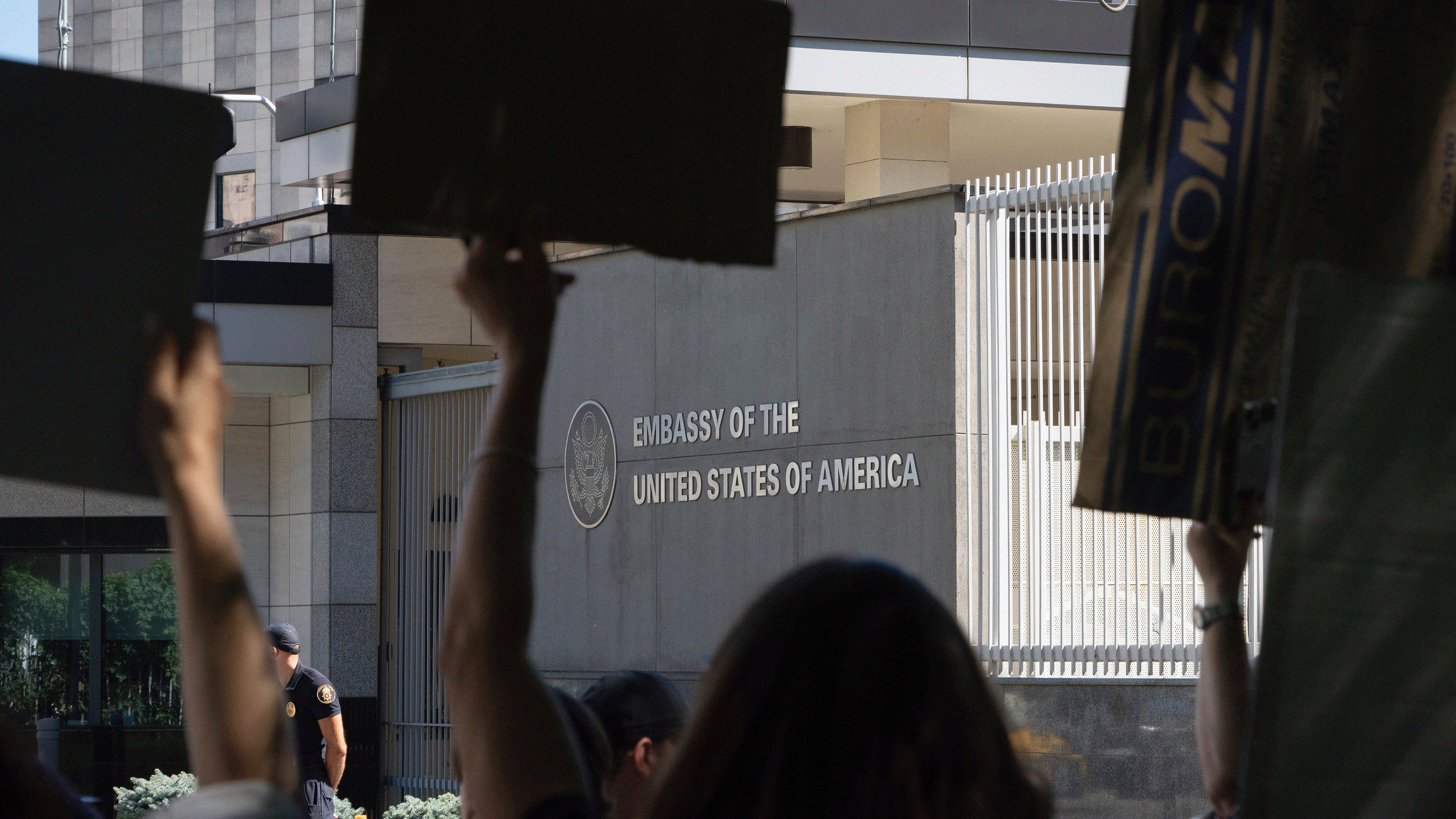
Where Are America’s Ambassadors?
The United States is fighting, in some form or another, with almost everyone. America’s in a hot war with Iran and a cold war with China and Russia (even if President Trump hasn’t figured that out). Trump has ignited various trade wars, and keeps talking up a possible conflict with Cuba. And just for good measure, the president seems still obsessed with grabbing Greenland, which would spark a confrontation with NATO, the most powerful and successful alliance in history—and one supposedly led by Washington.This might seem like a good time for some traditional diplomacy: deploying ambassadors to smooth ruffled feathers, assure friends and warn enemies of American resolve, and work out details on trade and other issues that require professional attention. The problem is that those ambassadors don’t exist. As The Wall Street Journal reported last week, the Trump administration has left more than 100 ambassadorships unfilled, including some to important U.S. allies.This is an unprecedented number of vacancies, even for a White House that has shown little interest in traditional diplomacy. (At the same point in Trump’s first term, only 45 slots were unfilled, which was nonetheless a slower rate of nominations than those of his predecessors.) The American Foreign Service Association, the union that represents Foreign Service officers, told the Journal that Trump “has been slow to nominate ambassadors, and those he nominates can often be held up in an increasingly slow and logjammed Senate confirmation process.”Well, yes—but that’s a polite way of saying that Trump doesn’t understand the importance of ambassadors, and that he prefers to hand out such posts to friends and cronies, who will face tougher-than-normal Senate fights. In his usual personalized and chaotic way, he appears to bestow these appointments not to serve U.S. diplomatic goals, but to reward loyalty and, perhaps, troll the American public and the international community.In fairness to Trump, every president