Tech I'm skeptical of and why
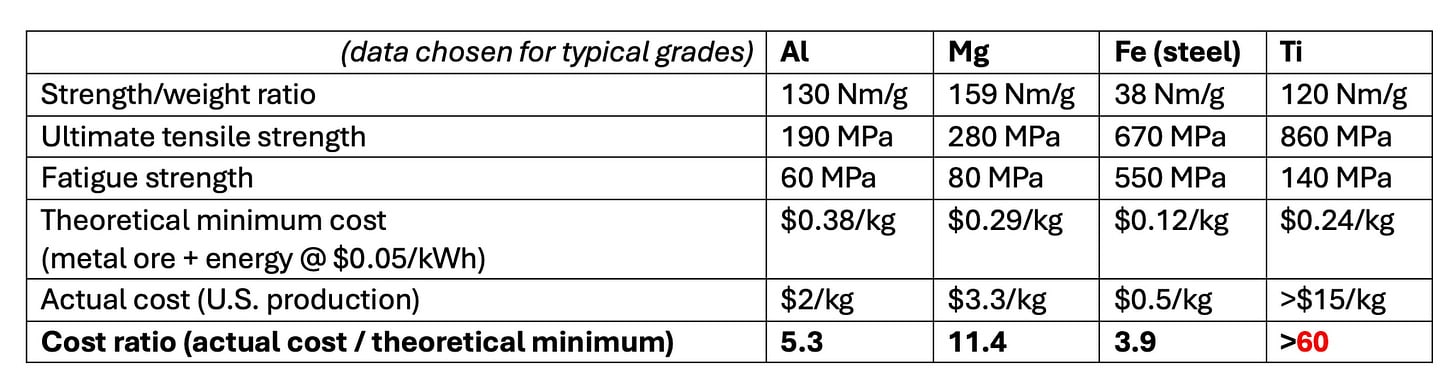
I’m a fan of people trying things, even if they seem silly. Dismissing risky ideas misses the point of research.But thoughtful criticism can direct effort to more promising fields. To that end, I’m going to try to make my criticism as constructive as possible, with concrete reasons for my pessimism and closely related research areas which are promising (and stand to benefit even from failures in the field I’m criticizing).Not every section will live up to that standard; some arguments are built on vibes alone. I might be wrong, so I still want to see people work on these problems.PreliminariesExhaustible resources more expensive long-termThe theory of exhaustible resources suggests that “the real price of an exhaustible resource should grow at a rate equal to the real interest rate.” The data are consistent with this hypothesis[1].Innovations in search and extraction can dramatically lower prices in the short term, but in the long term, we converge on a correct way to do things. Once extraction is solved, prices return to their slow upward climb.Idiot indexRaw materials are just a fraction of the final cost of a good. You need to take out loans to buy the materials. You need land and trucks. You need to buy equipment. You need people to design, build, and test.(And robots do not solve labor costs. Robots are made of raw materials and equipment and loans. Most importantly, like humans, robots have an opportunity cost, other uses of the robot bid up the price. Robots will have a non-zero “wage”.)It’s usually straightforward to estimate input costs, but these other costs (land, equipment, wages, etc.) are tricky. I’ll try to get around this with the idiot index: the ratio of the final cost of a good to the cost of the raw materials. An example for metals:SourceWe’ll use the idiot index as a heuristic to think about the hard-to-estimate costs of producing a good. If we know the raw materials cost and an idiot index for similar products, we can guesstimate the final cost