Q&A: The current state of ‘carbon dioxide removal’ around the world
Why this matters: environmental and climate reporting with long-term consequences.
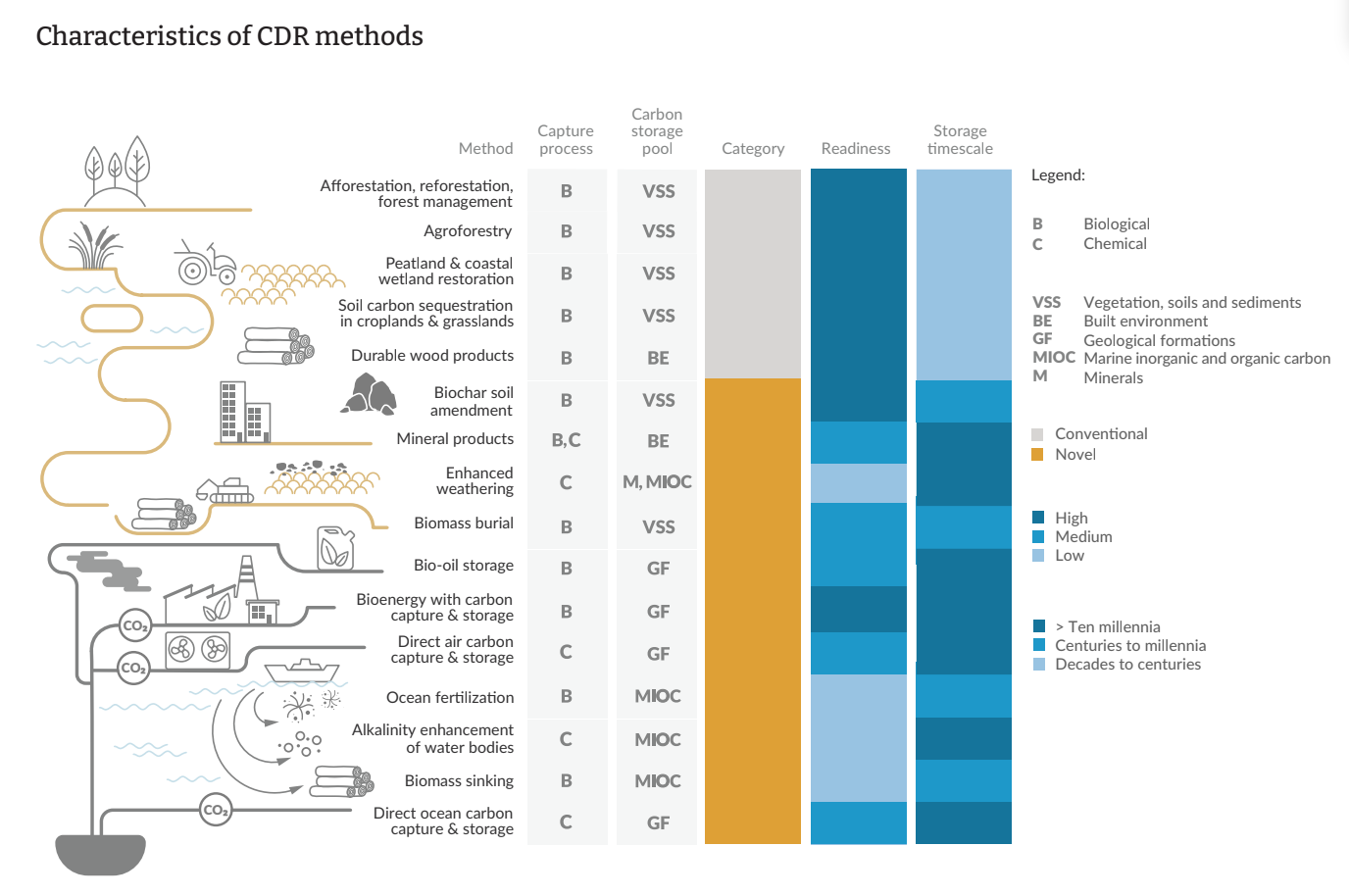
Carbon dioxide removal (CDR) technologies will need to be deployed at rates even faster than those seen for solar power, if the world is to have a chance of limiting global warming to 1.5C by 2100, says a new report. Nearly all pathways to meeting the Paris Agreement’s highest ambition of keeping global temperatures to 1.5C above pre-industrial levels in 2100 involve CDR techniques – ranging from tree-planting to sucking CO2 from air with machines. This is in addition to steep and immediate emissions cuts. Scientists expect carbon emissions to push warming beyond 1.5C in the decade ahead, meaning that the target can only be achieved “from above” via large-scale CDR that brings down global temperatures. These temperature trajectories are known as “overshoot” pathways. The third “state of CDR” report, written by more than 50 scientists, says that countries’ current CDR plans would fall short of what is needed to limit warming to 1.5C by more than 5bn tonnes of CO2 (GtCO2) per year by 2050. Global CDR would have to increase fourfold – from 2.2GtCO2 in 2026 to 8.75GtCO2 by 2050 – to have a chance of meeting the 1.5C target by 2100, according to the report. It adds that deploying CDR can be a “gradual process”, making the period 2026-30 “crucial” for “establishing CDR’s role in limiting climate damages” in the future. Below, Carbon Brief covers the key findings of the third state of CDR report. (This follows from Carbon Brief’s coverage of the first report in 2023 and second report in 2024.) What is CDR? What are current levels of CDR? How much CDR is needed to reach net-zero goals? What does the science say about the potential and costs of CDR? What have governments pledged on CDR? What is the current funding and research landscape for CDR? How is policy impacting CDR demand? What is CDR? According to the report, the definition of CDR is: “Human activities capturing CO2 from the atmosphere and storing it durably in geological, terrestrial or ocean reservoirs, or in prod