Astronomers measure the mass of a dormant black hole, our solar system's lost protoplanet, and more science stories
Key takeaways
- Aaron Bell/CU Boulder It's been an eventful week in science news.
- Using data from the James Webb Space Telescope, researchers have measured the mass of a dormant black hole 10 billion light-years away.
- The technique boils down to "combining JWST's sharp vision with a natural magnifying glass," said lead author Andrew Newman, from Carnegie Science.
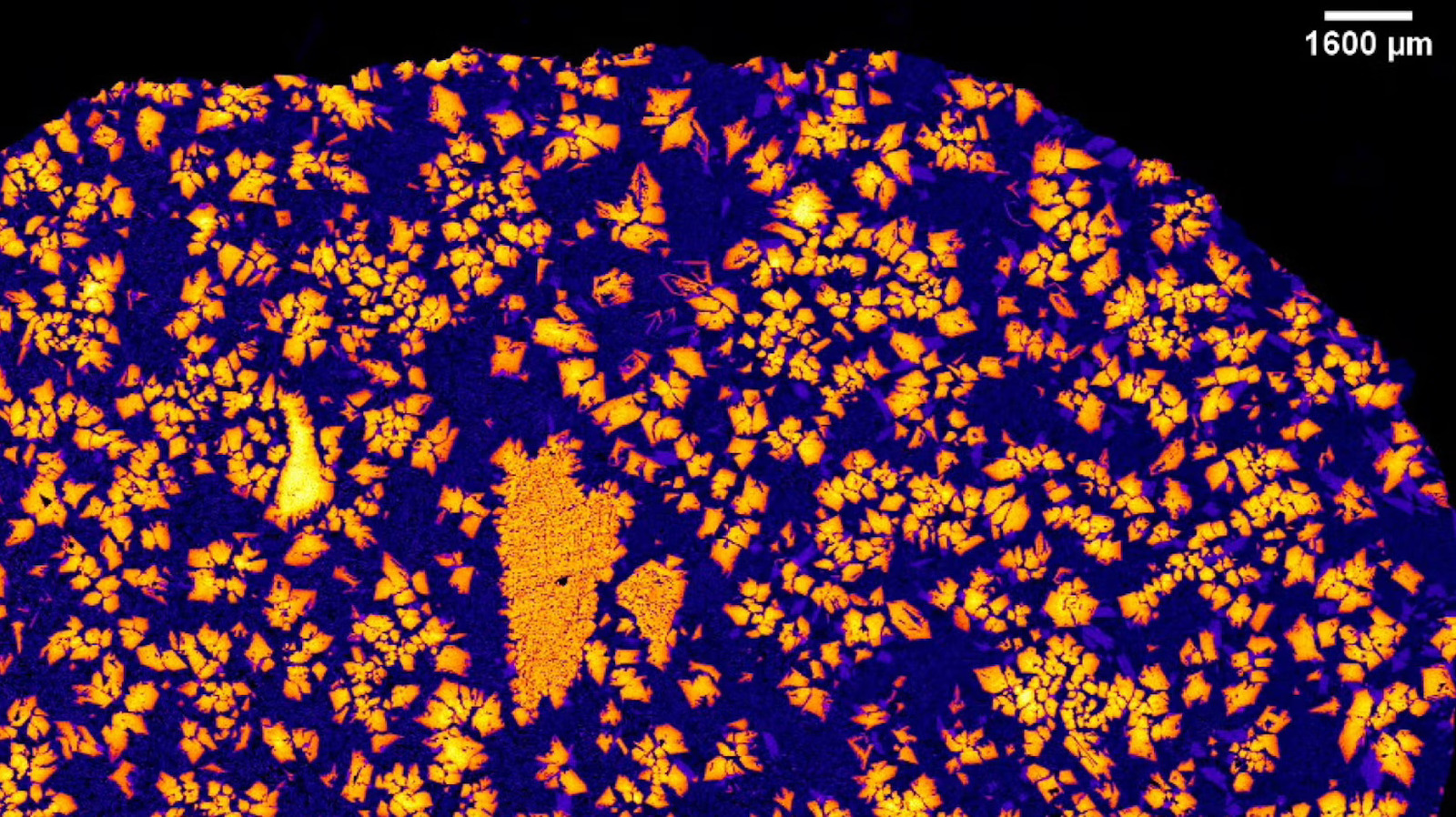
Aaron Bell/CU Boulder It's been an eventful week in science news. Astronauts on the ISS were briefly ordered to shelter in place after the discovery of an air leak in the transfer tunnel, NASA officially declared its MAVEN space probe dead and scientists announced the creation of a "universal vaccine" designed by AI. Plus, researchers used the James Webb Space Telescope to directly measure the mass of a distant black hole and a meteorite revealed clues about a long-gone protoplanet in our solar system. Catch up here on these stories and more from this week.
Using data from the James Webb Space Telescope, researchers have measured the mass of a dormant black hole 10 billion light-years away. Dormant black holes are trickier to observe than those that are actively feeding, as they aren't surrounded by light from hot gas and dust encircling them as material is pulled in. But thanks to JWST's capabilities and gravitational lensing, or the phenomenon in which the gravity of a massive object such as a black hole warps the light passing around it, the team was able to measure the black hole at the center of MRG-M0138, a distant galaxy from the early universe.
The technique boils down to "combining JWST's sharp vision with a natural magnifying glass," said lead author Andrew Newman, from Carnegie Science. "By combining JWST data with gravitational lensing, we could peer inside the black hole's sphere of influence, where its gravity boosts the speeds of stars," Newman said. "This is one of the best techniques we have to weigh a black hole, so we were excited to extend it to a much earlier period in cosmic history."