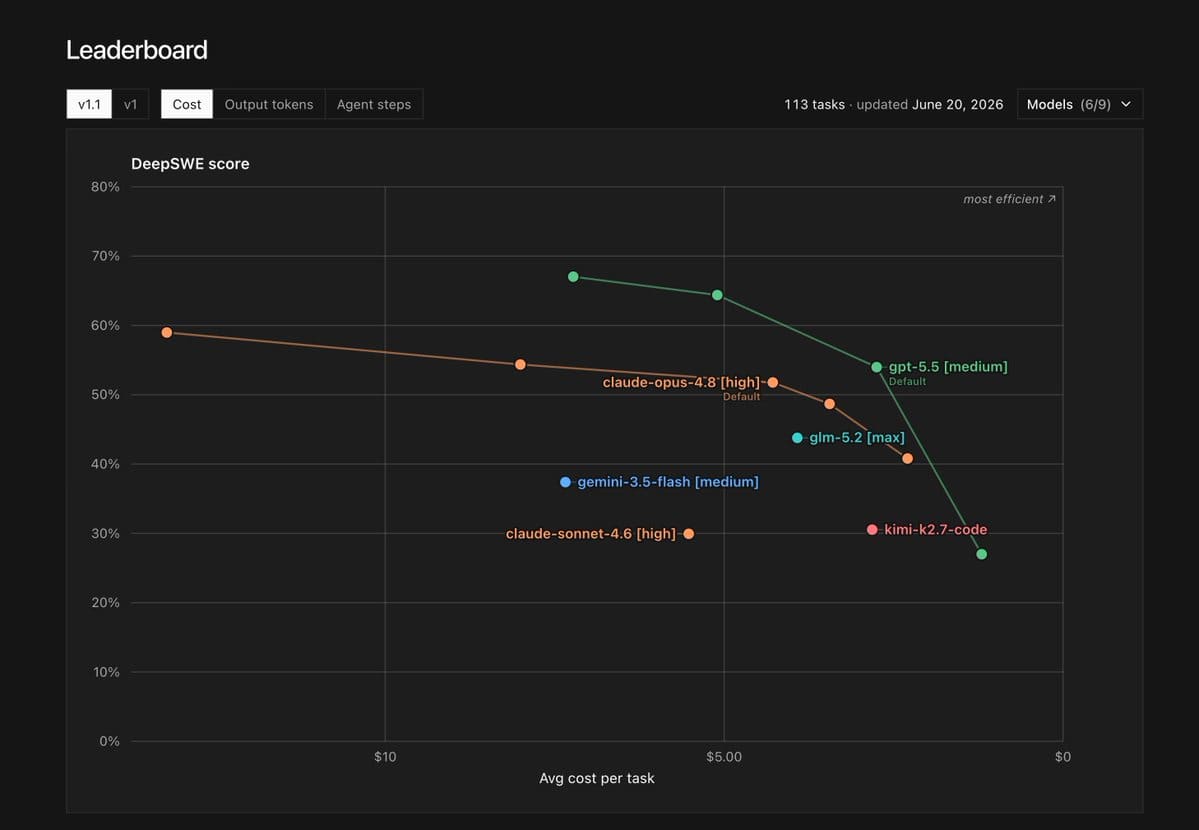
GLM-5.2 Is The New Best Open Model
GLM-5.2 arrived last week. It boasts excellent benchmarks and looks strong. Benchmarks here are a de facto ceiling of how good it is, not a point estimate. Essentially all other aspects of an open model like this, beyond speed and price, will almost always be worse than the numbers suggest. Still, impressive. It is definitely a large step up from GLM-5.1, and likely the strongest open model. GLM-5.2 is still substantially behind the absolute frontier, although plausibly on the cost-benefit Pareto frontier. It seems closer to the frontier than previous efforts, including probably closer than DeepSeek R1 was during the DeepSeek moment. This is the new ‘peak close behind’ moment. Its existence is a substantial updates to push back some of the ‘where are all the updates’ updates in the opposite direction over time. Purely in terms of core tasks that GLM-5.2 is capable of doing, and ignoring missing features and its inferior generalization, and ignoring that it is distilled from Claude, and ignoring the Mythos class of models, and marking purely from date of public release, you can make a case GLM-5.2 is somewhere between 4 months and 7 months behind the frontier, at a lower price. That does not mean it is all that useful in practice. Finding its niche is tricky unless you inherently value openness. It is not cheap enough, or better enough than cheaper alternatives, for the true bulk tasks, nor strong enough for the strongest tasks. There are various practical difficulties, including lack of vision. This post gives GLM-5.2 the full capabilities post treatment. But first, a word for our favorite Congressional candidate, whose election is tomorrow. Alex Bores For Congress In NY-12 In the strongest terms, this blog enthusiastically endorses democrat Alex Bores in his congressional primary in my home district, NY-12. Alex Bores has been a champion of sensible AI regulation in the New York Assembly, including championing the RAISE Act, and fighting to keep its provisions inta