Evacuations begin for hantavirus-hit cruise ship, with American passengers to be quarantined in Nebraska. ‘This is not another COVID’
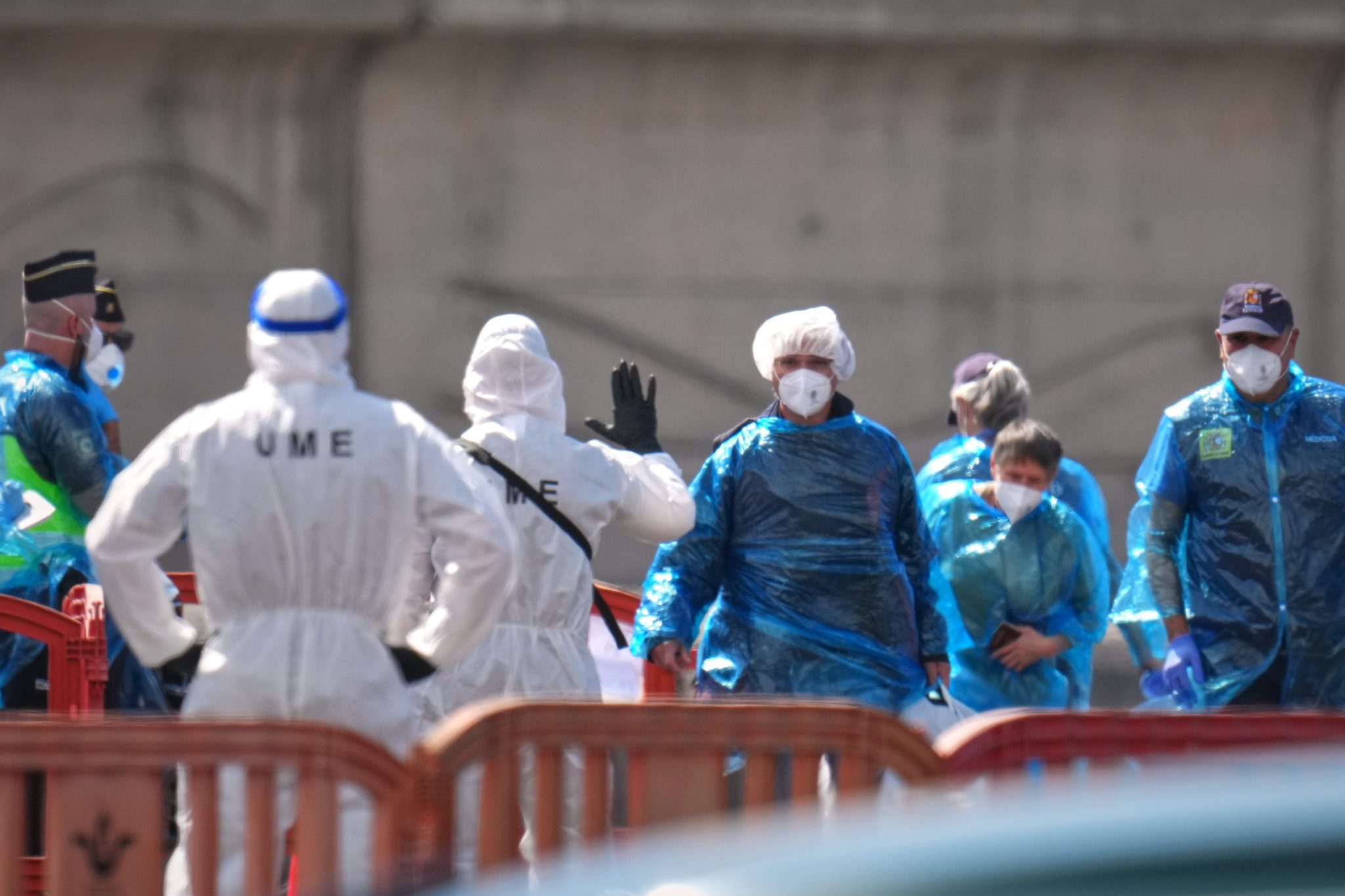
The first passengers to be evacuated from the hantavirus-hit cruise ship now anchored off Spain’s Canary Islands arrived Sunday afternoon in Madrid, where they were being taken to a military hospital. Soon after, a French evacuation plane landed in Paris, where it was met by emergency vehicles that whisked passengers to hospitals. Spanish nationals were the first to leave the MV Hondius, which reached Tenerife, the largest island in the Spanish archipelago off West Africa’s coast, early Sunday. A plane carrying Canadian nationals also left Tenerife after the Spanish plane. A Dutch plane was due to depart with Germans, Belgians and Greeks, while an American plane was expected to reach Tenerife around 5:30 p.m. local time (1630 GMT), according to FlightRadar 24, which shows live aircraft flight tracking details. Maria van Kerkhove, the World Health Organization’s top epidemiologist, said that a number of other flights were expected to arrive Sunday, including ones to repatriate passengers to Turkey, the United Kingdom and Ireland. None of the more than 140 people on the Hondius has shown symptoms of the virus, officials from Spain’s health ministry, WHO and cruise company Oceanwide Expeditions said. WHO Director-General Tedros Adhanom Ghebreyesus reiterated that the general public should not be worried about the outbreak. “We have been repeating the same answer many times,” he said. “This is not another COVID. And the risk to the public is low. So they shouldn’t be scared and they shouldn’t panic.” Even so, those disembarking and personnel working at the port of Granadilla in Tenerife wore protective gear during the evacuation process, including face masks, hazmat suits and respirators. Video obtained by The Associated Press showed passengers on the tarmac donning similar suits and being sprayed down with disinfectant. Passengers were relieved to be on their way to their home countries, another WHO official said. “It’s been great se