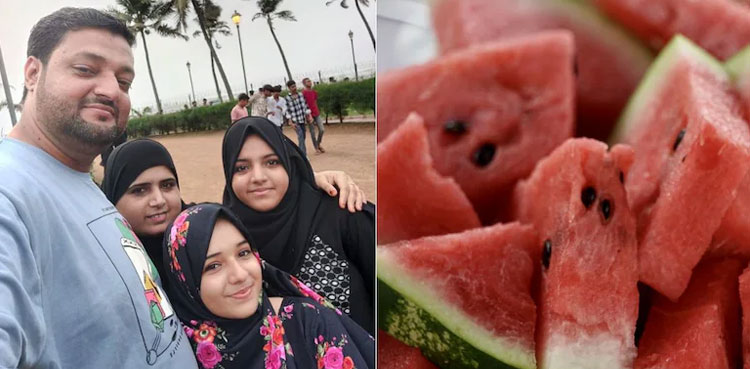
Watermelon death case solved
Key takeaways
- The deaths of four members of a family in Mumbai’s Pydhonie area, a case that had triggered days of speculation and rumours, now appear to have a far darker explanation than first believed.
- Investigators have confirmed that the Dokadia family did not die after eating watermelon, despite early suspicion surrounding the fruit.
- The incident dates back to the night of April 25, when Abdulla Dokadia, his wife Nasrin, and their daughters Aayesha and Zaineb hosted relatives at their home in Ghari Mohalla on Ismail Kurte Road in south Mumbai.
Why this matters: local context for readers following news across Pakistan and the region.
Add ARY News on Google AAResize. The deaths of four members of a family in Mumbai’s Pydhonie area, a case that had triggered days of speculation and rumours, now appear to have a far darker explanation than first believed.
Investigators have confirmed that the Dokadia family did not die after eating watermelon, despite early suspicion surrounding the fruit. Forensic examination instead found traces of zinc phosphide, a highly toxic rat poison often used inside homes and storage areas to control rodents.
The incident dates back to the night of April 25, when Abdulla Dokadia, his wife Nasrin, and their daughters Aayesha and Zaineb hosted relatives at their home in Ghari Mohalla on Ismail Kurte Road in south Mumbai. Family members who attended the gathering were reportedly served biryani before leaving later in the night.