America’s Big Mistake in Iran
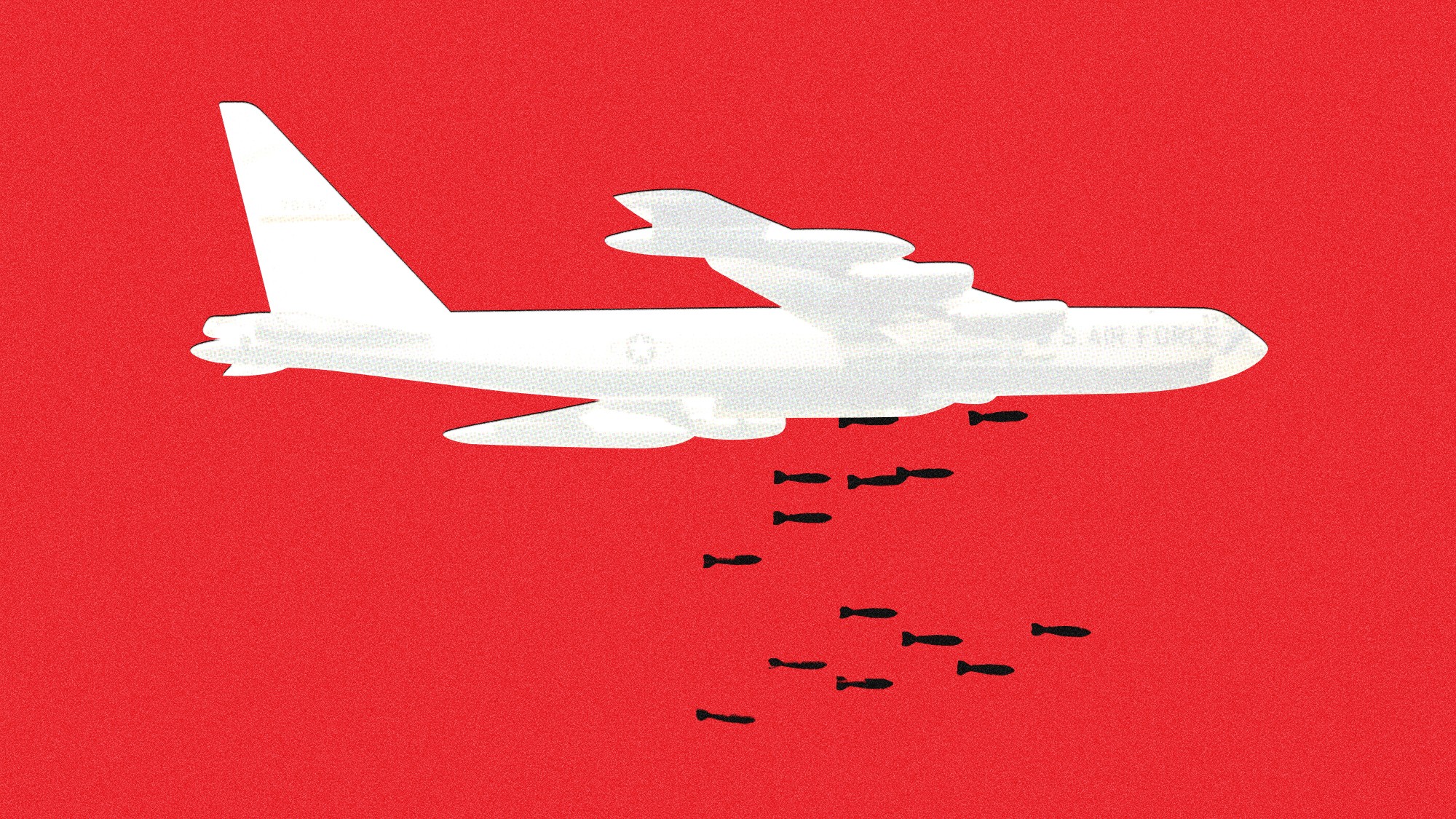
When the United States and Israel launched the war on Iran in February, their plan was simple: bomb Iran until either the Iranian public rose up and overthrew the government, or the existing government capitulated to American demands. It rapidly became apparent that neither was going to happen. The Iranian people didn’t revolt against their oppressors. The Iranian government hunkered down, closed the strait, and gambled that the U.S. would be unwilling to invade or strike at crucial infrastructure.So it seems U.S. planners made an obvious, if common, mistake: They assumed that a war could be won via aerial bombing alone.Starting right after World War I, military theorists in the United States, Italy, and the United Kingdom rallied around the idea that airpower lessened or eliminated the need for armies and navies. Their central thesis was that wars could be won almost exclusively with bombers and bombing campaigns.In his 1921 book, Il dominio dell’aria (“The Command of the Air”), Italian General Giulio Douhet argued that whichever nation claimed air superiority first would be able to bomb their enemies’ cities to ash, forcing capitulation. Marshal Hugh Trenchard, the so-called father of the Royal Air Force who pioneered strategic-bombing theory during World War I, thought that airpower could break an enemy’s will to fight rather than merely provide tactical support for ground troops. And General Curtis LeMay, an American champion of strategic bombing, believed that overwhelming, concentrated force was the best way to win a war. He favored the use of incendiary weapons against urban centers and of immediate, devastating strikes instead of gradual escalation.[Read: The price of defeat in Iran]When these theories of total war through bombing were put to the test in World War II and beyond, however, they failed miserably. The German Blitz on London did not induce the British public to give in. Allied bombing of Germany did not break the Nazis’ will to fight; the German