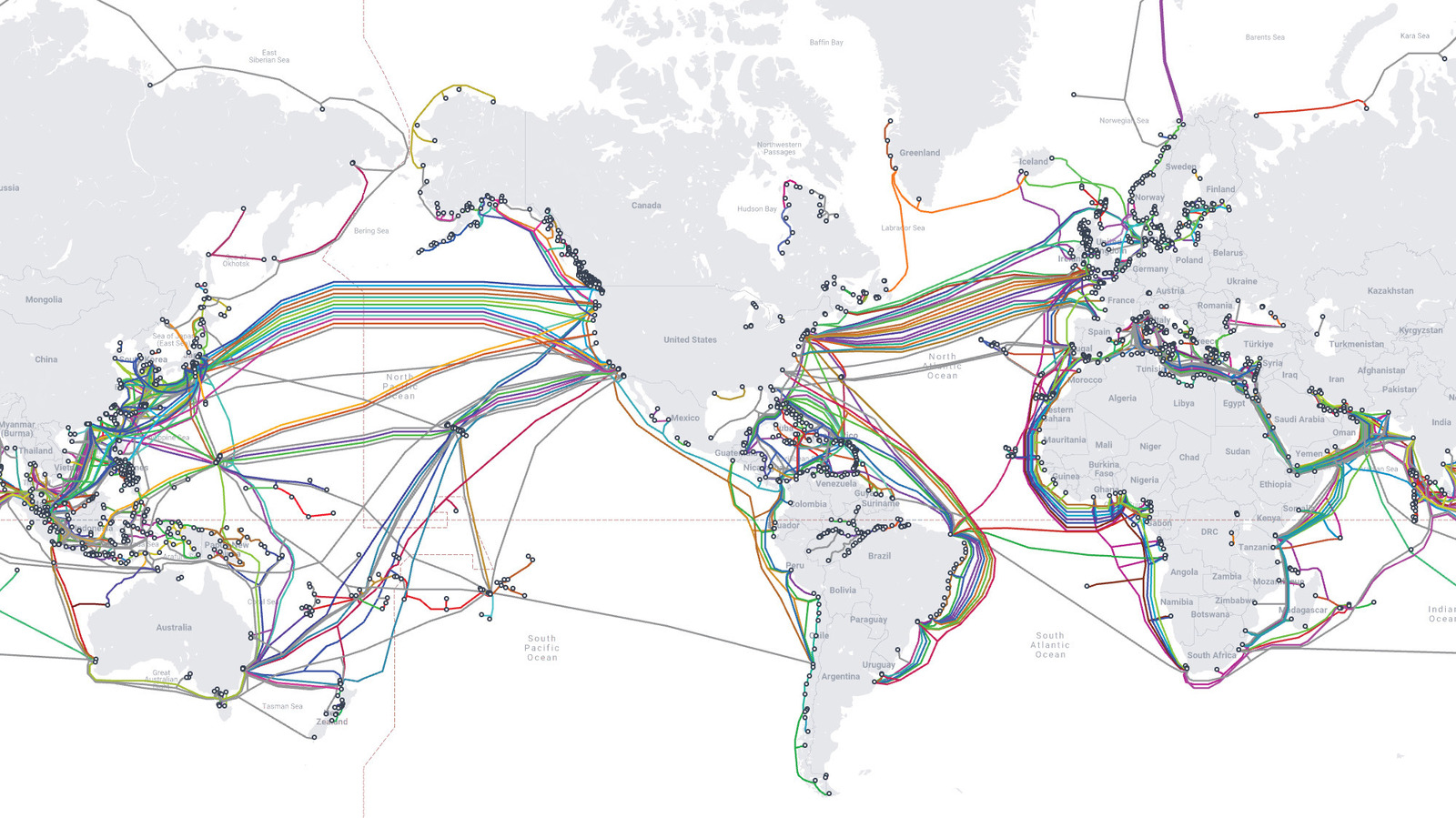
How the Internet Crosses Oceans Without You Noticing
Key takeaways
- Undersea cables carry around 99 percent of international data.
- The ocean floor is home to some of the strangest creatures on Earth.
- Earlier this year, TAT-8 (Trans-Atlantic Telephone 8), the very first transatlantic fiber-optic cable, was pulled up after 38 years.
Undersea cables carry around 99 percent of international data.
Alcatel Submarine Networks. The ocean floor is home to some of the strangest creatures on Earth. But it's also where your strangest Tik Toks go to reach Alaska, Hawaii or the other side of the planet. Most of the world's international online traffic travels through cables lying at the bottom of the ocean.
Earlier this year, TAT-8 (Trans-Atlantic Telephone 8), the very first transatlantic fiber-optic cable, was pulled up after 38 years. It had been sitting, unused, at the bottom of the Atlantic for nearly a quarter of a century. It might be mind-boggling to think about how long these sit in the depths of our oceans, transmitting our emails, video calls and memes across the globe. Let's make sense of how these cables work and why pulling the TAT-8 up was worthwhile.