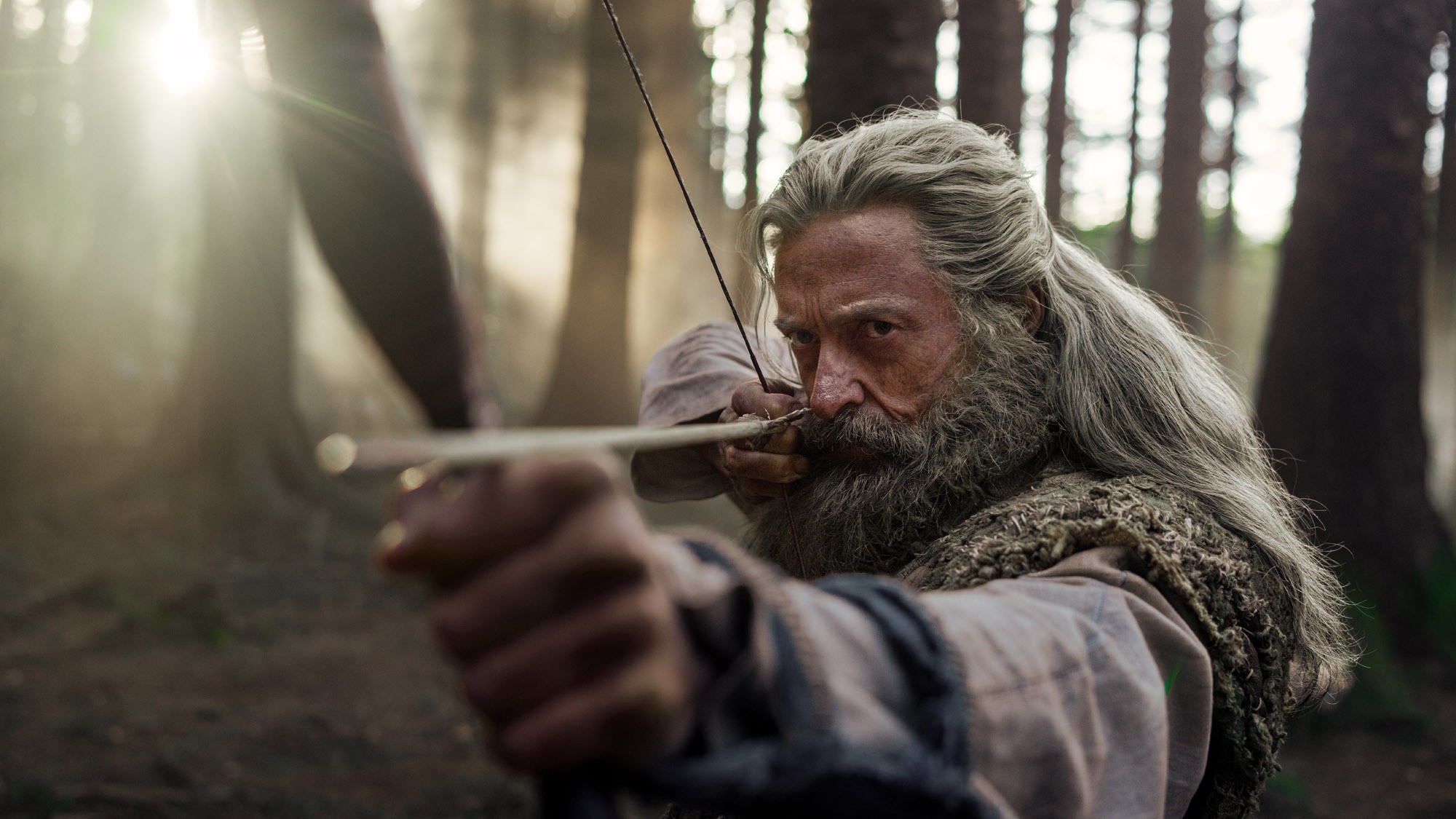
A Robin Hood You May Not Want to Root for
What if you took a folk figure or a popular comic-book character—someone beloved enough to be the star of, say, a Disney cartoon—and made a film that cast them in a dark, even antiheroic light? Call it the “grim and gritty” take, or perhaps the “untold true story”; it’s the kind of reimagining that has befallen several storybook figures on-screen, such as Peter Pan and Hansel and Gretel. The saga of Robin Hood, the British outlaw, is particularly popular, and has been told many times over at this point. He has been a swashbuckling do-gooder from Hollywood’s Golden Age, as well as a cute animated fox. But of late, cinema has tried to cast a shadow over the man, not one of those depictions murkier than the director Michael Sarnoski’s The Death of Robin Hood.This new rendition stars Hugh Jackman, who is no stranger to roughening up an established protagonist. He most famously played the X-Men character Wolverine as a fading but bloodthirsty old cowboy in Logan, the acclaimed comic-book adaptation. The Death of Robin Hood is based on the English ballad Robin Hood’s Death, a poetic Middle English telling of the bandit’s final days. But whereas the original tale is romantic and melancholic, Sarnoski’s take has a much harder edge—so much so that I was genuinely aghast at the brutal, blunt violence of its first act. This is not a film striving to make Robin Hood a more complex figure. It first presents him starkly as an amoral villain, almost monstrous, then challenges the audience to accept that such a creature could be worthy of any redemption.So far in his fledgling career, Sarnoski has found himself drawn to fairly downbeat narratives. His feature debut was the excellent Pig, in which he cast Nicolas Cage as a grumpy, battered hermit drawn back into the frightening subculture of the Portland food scene he’d once escaped (trust me, it makes sense in context). His big-budget follow-up was A Quiet Place: Day One, a prequel to the silent horror film A Quiet Place; I found i