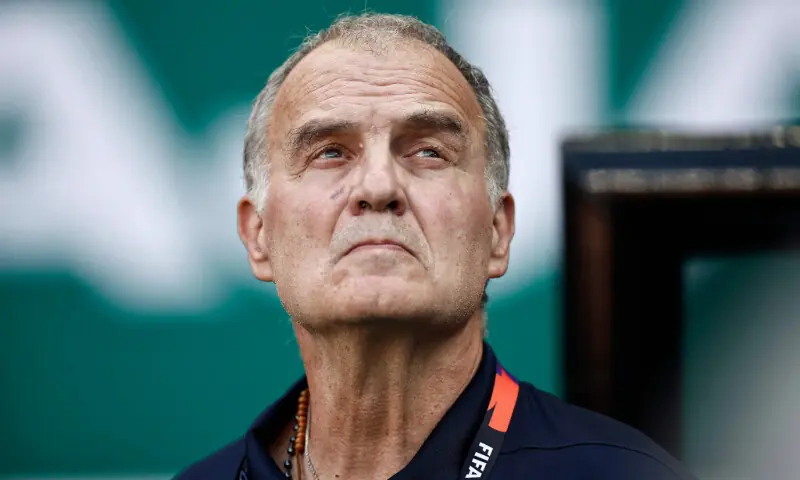
Marcelo Bielsa: The coach who changed football, but not his ways
Why this matters: local context for readers following news across Pakistan and the region.
Marcelo Bielsa has never cared much for appearances. When FIFA gathered coaches for its official Club World Cup photoshoot earlier this month, Uruguay’s manager stood with his hands in his pockets, looking down rather than towards the camera. Asked afterwards why he refused to pose conventionally, the 70-year-old dismissed the question. “I’m not a model,” he said. “I don’t have to give any explanation. The picture was taken the way it was taken.” It was a typically Bielsa response — indifferent to optics and entirely consistent with a career built on doing things his own way. Days later, Uruguay’s campaign came to a disappointing end. A 1-0 defeat to Spain, following draws against Saudi Arabia and tournament debutants Cape Verde, condemned the two-time world champions to a second successive group-stage exit. Afterwards, Bielsa offered a brutally honest assessment of his time in charge. “I have not left anything to Uruguayan football,” he admitted. Whether those words mark the end of his coaching career or simply another chapter remains uncertain. What is beyond doubt is Bielsa’s place among football’s most influential thinkers, even if his own career rarely produced the sustained success that many believed his ideas deserved. The revolutionary Born in Rosario in 1955, Bielsa never made his name as a player. Instead, he emerged as one of football’s most innovative coaches after taking charge of Newell’s Old Boys in 1990. His methods were demanding. Training sessions were meticulously planned, video analysis became an obsession and players were expected to embrace relentless pressing and intense physical work. Bielsa’s teams attacked vertically, defended aggressively and functioned as collective units rather than relying on individual brilliance. Those ideas, revolutionary at the time, earned him both admiration and the nickname El Loco, “The madman”. His reputation grew further during spells with Argentina and Chile. Argentina’s highly-rated side suffered a shock fir