US awards F-16 upgrade contract for Pakistan, other states
Why this matters: local context for readers following news across Pakistan and the region.
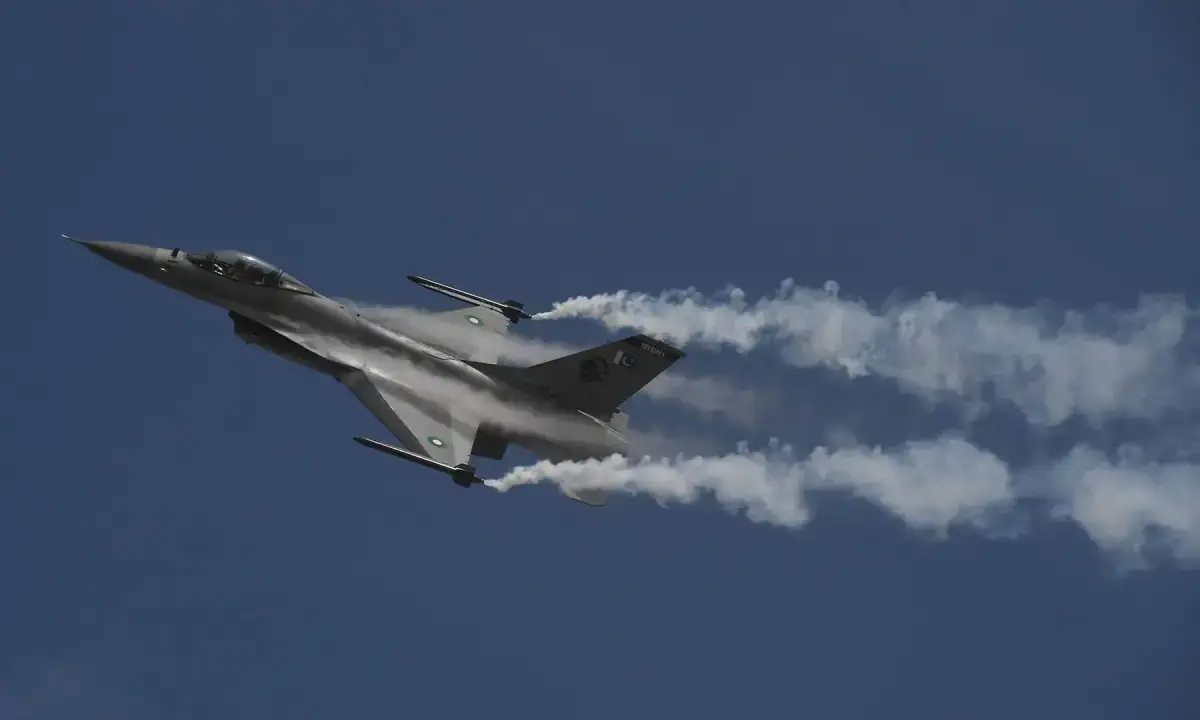
WASHINGTON: The United States Air Force has awarded a $488 million contract to Northrop Grumman Systems Corp. for long-term engineering and technical support of F-16 Fighting Falcon radar systems, with Pakistan among the countries covered by the deal. According to an official award notice, released this week, the firm-fixed-price, indefinite-delivery, indefinite-quantity contract will support the APG-66 and APG-68 radar systems used on F-16 fighter aircraft. Work will be carried out in Linthicum Heights, Maryland, and is scheduled to continue through March 31, 2036. The contract covers support for multiple partner countries under the US Foreign Military Sales (FMS) programme, including Bahrain, Belgium, Chile, Denmark, Egypt, Greece, Indonesia, Iraq, Israel, Jordan, South Korea, Morocco, the Netherlands, Norway, Oman, Pakistan, Poland, Portugal, Romania, Thailand and Turkiye. The award was issued on a sole-source basis by the US Air Force Lifecycle Management Centre in Utah. An initial $2.64 million in fiscal 2026 non-appropriated Air Force and Navy funds has been obligated at the time of award. The latest support arrangement underscores the long-term US commitment to sustaining F-16 operational readiness across allied and partner air forces, including Pakistan, which continues to operate a fleet of US-origin fighter aircraft under periodic upgrade and maintenance arrangements. The development follows a separate US notification in December 2025, when the Defence Security Cooperation Agency (DSCA) informed Congress of a proposed $686 million package to upgrade and support Pakistan’s F-16 fleet. That package includes Link-16 tactical data systems, cryptographic equipment, avionics upgrades, training and logistical support. The DSCA described the proposed sale as aimed at strengthening interoperability among Pakistan, the US, and partner forces for counterterrorism cooperation and future contingency operations. The upgrade plan also includes modifications to operat