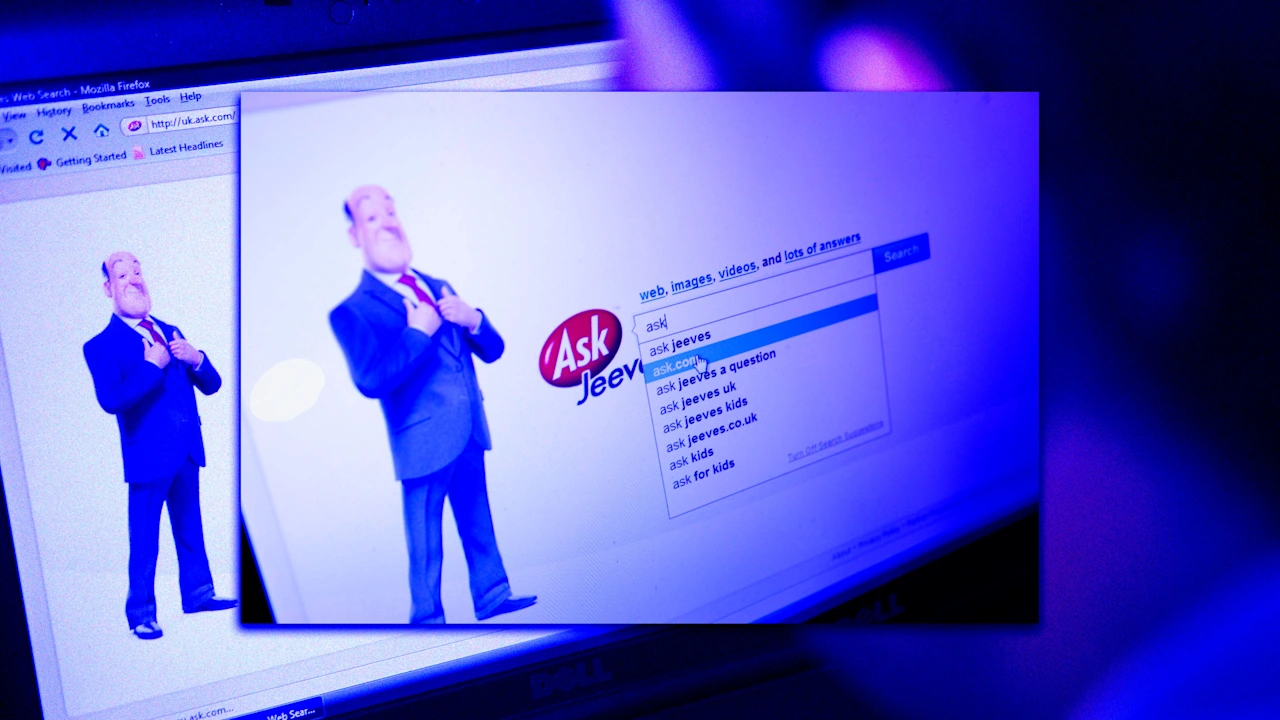
How Ask Jeeves blew it
Hello again, and welcome back to Fast Company’s Plugged In. Upon hearing of a celebrity’s death, have you ever been startled to realize that they hadn’t left us long ago? That happened to me last weekend. Except the dearly departed in question wasn’t a person, but a company: Ask.com, the web property forever better known by its original brand, Ask Jeeves. For years, I wrote about Ask quite regularly. But when its owner, media conglomerate IAC (which is in the process of changing its own name to People Inc.), announced it had shut down the site as of May 1, it was its first time in the news in more than 15 years. The last time before that was in November 2010, when IAC gave up on Ask being a general-purpose search engine and turned it into a user-generated Q&A site. At some point in between those two moments, Ask had morphed into a bottom-feeding portal for articles so out of date that “10 Best Documentaries of 2022—So Far” was one of the headlines on its homepage when IAC pulled the plug. In other words, it’s been a long time since Ask.com mattered. And yet its demise inspired a flurry of nostalgic reveries, focused on its early days, original name, and cartoon butler mascot. That residual fondness reminded me that once upon a time, the company really had something. But instead of capitalizing on what it had created, it gave up—just before it might have been able to fulfill its vision. Ask Jeeves debuted in 1997, a moment of great expectations for the nascent field of internet search. As the web exploded with content, Ask Jeeves was one of a bevy of startups that emerged to organize it. Yahoo and AltaVista were the big dogs, but others included Excite, Lycos, HotBot, LookSmart, Northern Light, and WebCrawler. A very early version of Ask Jeeves, when the entire internet looked like a junior high student’s GeoCities page. Meanwhile, a couple of Stanford graduate students, Larry Page and Sergey Brin, were working on their own search algorithm. When Google launche