Context compression finally works in production: new research cuts LLM input 16x without the accuracy hit
Why this matters: a development in AI with implications for how people work, create, and decide.
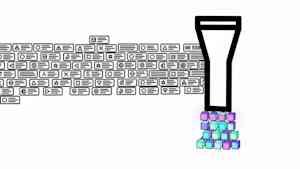
Context windows are becoming a computational bottleneck. The longer an agent runs, the more tokens accumulate from retrieved documents, reasoning traces and conversation history, and the more memory and compute that growing context demands. Most existing solutions either degrade model accuracy, require the full context to load before compression begins, or produce memory savings that don't translate into real speedups in standard serving infrastructure.A research team from NYU, Columbia, Princeton, University of Maryland, Harvard and Lawrence Livermore National Laboratory published a paper this week that proposes a novel fix. The researchers introduce the concept of Latent Context Language Models, or LCLMs, a family of encoder-decoder compression models that compress input context before it reaches the decoder. The models are open-sourced on HuggingFace.Unlike KV cache compression methods — the dominant approach in the field, which still materialize the full KV cache before evicting entries — LCLMs compress the input token sequence before decoder prefill, so higher compression ratios directly reduce decoder-side compute and memory. The paper reports LCLMs at 16x compression produced output 8.8 times faster than KV cache baselines on the RULER long-context benchmark."These ballooning contexts take up memory and compute, and they are becoming a computational bottleneck for LLMs," Micah Goldblum, co-lead advisor on the project and a researcher at Columbia University, told VentureBeat. "Our goal was to train language models end-to-end that can handle very long contexts efficiently and accurately. If you can make such a language model, everything becomes cheaper and faster."What LCLMs can doLCLMs let models process much longer contexts than would otherwise be practical, at a fraction of the memory and compute cost, without the accuracy degradation that makes most compression methods a poor tradeoff in production.At 4x compression, the paper reports accuracy of 91.76