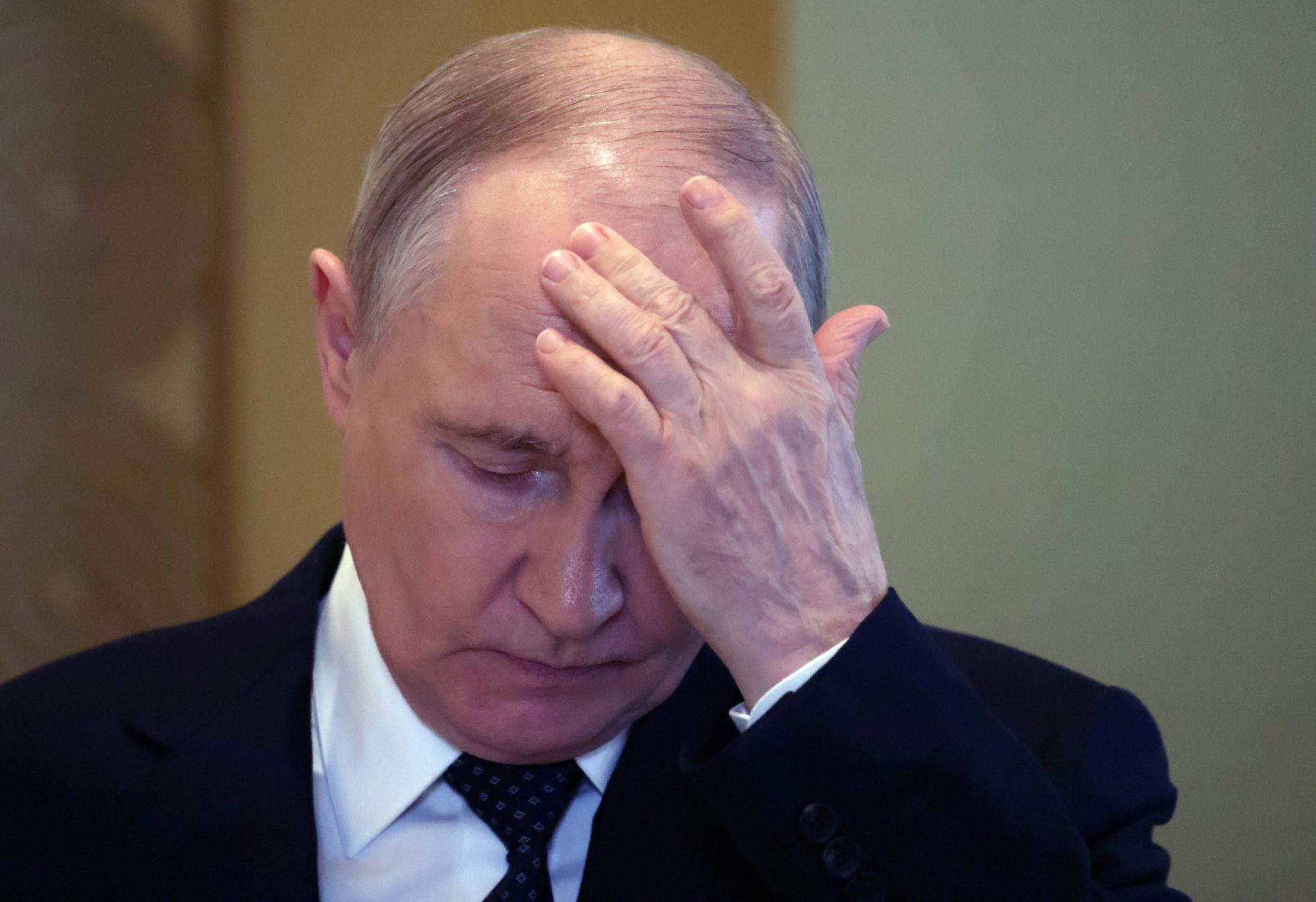
The end of Putin’s regime will spring from war spending chaos, former central bank advisor says, amid military mutiny threat and fuel-shortage brawls
Vladimir Putin’s grip on power has remained resilient despite the economic woes caused by his invasion of Ukraine, but the seeds of an eventual decline may have already been planted, according to a former Russian central bank advisor. A telltale sign is the Kremlin’s abandonment of any fiscal discipline as the costs of fighting the Ukraine war, which is now in its fifth year, strain existing resources. Alexandra Prokopenko, who is now a fellow at the Carnegie Russia Eurasia Center, pointed out in a recent Financial Times op-ed that the war has forced Russia to unwind its long-touted fiscal restraint. In a striking example of the turnaround, Russia’s parliament recently gave the finance ministry a blank check to spend more and borrow past its debt ceiling without a formal budget or explicit legislative approval. That’s as the budget deficit through May is already double 2025’s full-year level, hitting 2.6% of GDP, or about $83 billion. At the same time, Russia’s sovereign wealth fund, which has been tapped to cover budget shortfalls, is being rapidly depleted and just a fraction of prewar levels. “A cornered autocracy is rewriting the fiscal rules as it goes, cutting parliament out of the loop, and will not admit to dangers it cannot control,” Prokopenko wrote. “It’s less dramatic than a palace coup, but this is what decline looks like.” The precipitous deterioration in Russia’s finances coincides with Ukraine’s stunning military successes this year. Advanced drones and new tactics have allowed Kyiv to not hold off the Russian military’s attacks but push them back and regain territory. Long-range drones are also reaching deep into Russia, including St. Petersburg and Moscow, targeting refineries and the defense industrial base. The result has been devastating battlefield casualties that now outpace the ability to raise fresh recruits as well as soaring death-benefit payouts and widespread fuel shortage