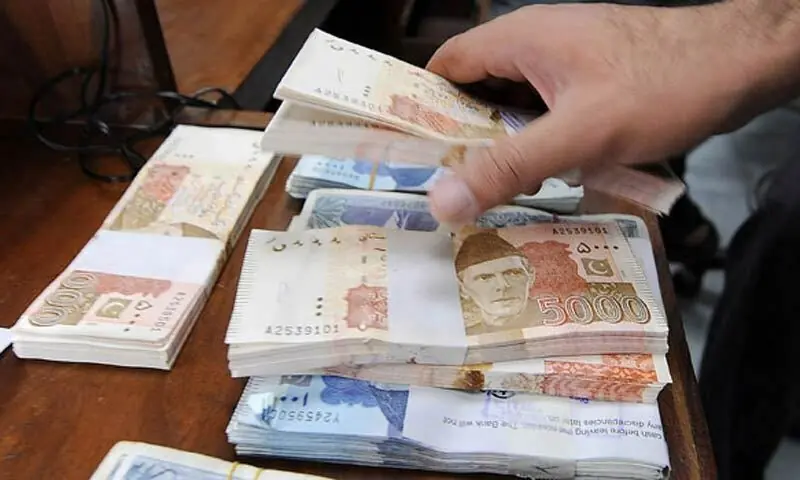
Foreign investors exit T-bills
Why this matters: local context for readers following news across Pakistan and the region.
KARACHI: The war in the region has almost wiped out foreign investment in Pakistan’s domestic bonds, leaving little chance of recovery if the current situation prevails, said financial experts. The State Bank of Pakistan (SBP) data showed that foreign investors have almost left the domestic bonds, which had been their preferred choice, as returns were highest in the region and very high compared with most other countries. A day ago, the central bank further increased the yields on Treasury Bills by up to 83 basis points to almost 12pc, making them more attractive to investors. The SBP data showed that over 94pc of foreign investment in T-bills left the country by April 17. Mideast war drives 94pc outflow from treasury bills This could be a result of destabilisation due to war in the region, which is still ongoing without knowing the final outcome of this deadlock in the talks between Iran and the United States. Threats and counter-threats between the two countries have created a broad range of uncertainties, while significant disruptions to oil and gas supplies from the region have already jeopardised fragile economies such as Pakistan’s. The oil import bill has risen to $800m per week, up from $300m before the Middle East conflict. The war has greatly shaken confidence as evidenced by the case of lucrative domestic bonds. From July 1 to April 17 2025-26, inflows into T-bills were $975 million, while outflows were $917 million, indicating a net investment of $58m. Experts said it is highly encouraging that Pakistan repaid a huge amount of $3.5bn to the UAE, $1.4bn against Eurobond maturity, and allowed outflows of profits and dividends from foreign investments amounting to $1.8bn during the first nine months of FY26. “Pakistan has re-entered the international market and raised $750m, reflecting that the confidence of foreign investors would jump with the end of the Gulf war, and we can expect large foreign investments in the post-war era,” said S.S. Iqbal, a money m