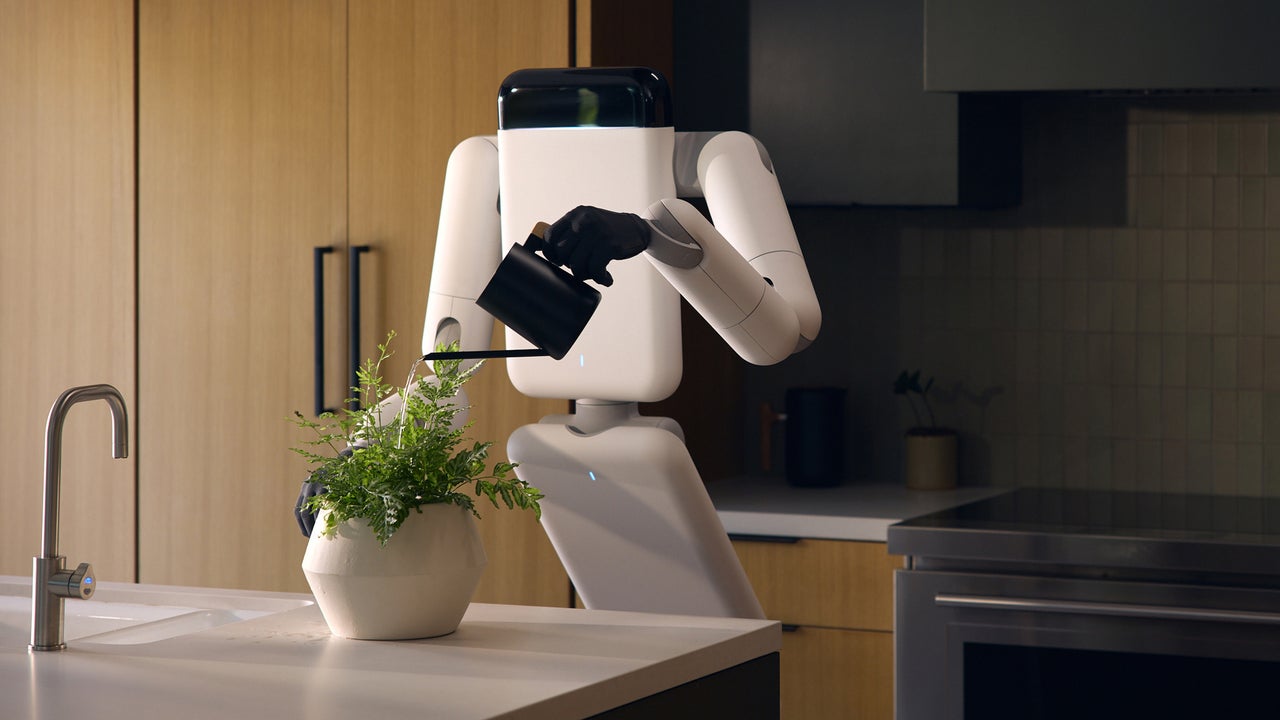
The anti-humanoid: Why Genesis AI’s new robot design isn’t a fake human
Genesis AI is betting against the tech industry’s obsession with bipedal, human-mimicking robots. Their first general-purpose machine, Eno, pairs millimeter-precise dexterous, human-like hands with a minimalist, wheeled base that can dynamically fold away out of sight. It’s a general purpose robot, designed to do anything you can imagine, from factory jobs to household chores, but its first deployment will be in labs. Genesis AI just fixed one of the biggest design flaws in modern robotics: Human ego. Instead of building another uncanny-valley humanoid that may intimidate and make people uncomfortable, the company’s CEO and founder Zhou Xian and head of design Daniel Hundt decided they needed to create a gentle, ‘invisible’, use-case agnostic physical agent that gets out of the way by folding down, origami style. Called Eno, the wheeled robot has a design that intentionally avoids looking like a human but operates with human-level dexterity. The robot sleeps folded, waiting for you to need it. Then, whenever you call it, it wakes up, rising up as it unfolds its collapsible frame that follows a design principle they call “calm intelligence.” [Image: Genesis AI] “A good test that we ask ourselves is, if you wake up at two o’clock in the morning, and you’ve come to the bathroom, and you see a robot in your home, what would you feel comfortable with having in your home?” Hundt tells me in a video interview. “I think a robot should feel like it is subservient to you, it should be an object that helps you, it shouldn’t feel like it can dominate you, and I think there’s so many humanoids out there that just feel like they’re more capable than you as a human, and I think that automatically makes you put a little bit at ease.” Like Hundt, Xian believes that everyday consumers reject the idea of a synthetic person walking through their living spaces. “I think generally, people think very human-like