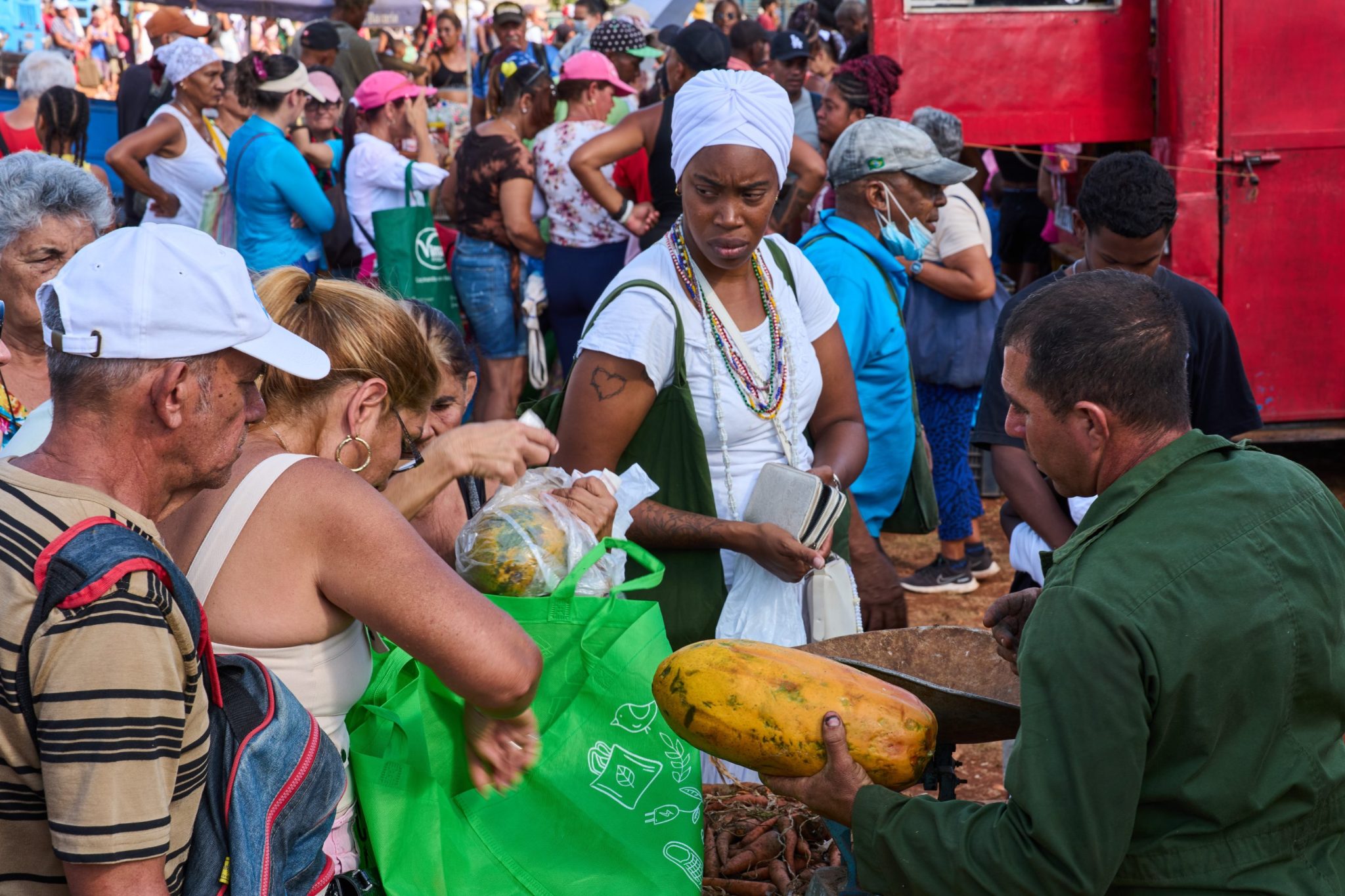
Basic goods in Cuba are increasingly sold in U.S. dollars as economy collapses. ‘Everything is scarce here — everything — even that wretched bread’
José Luis Amate López hasn’t had a customer in almost two weeks, not counting the scrawny brown kitten that slinks around the bodega where he works in central Havana. The shelves once laden with goods during his childhood sat nearly empty in late April, with barely anything to offer the 5,000 clients who depend on the state-run store for subsidized food. Government ration books that once provided for a healthy diet and kept families fully fed for a month are now shrinking. As the economy collapses and prices soar, a growing number of Cubans find themselves unable to afford alternatives to state-run stores and struggle to subsist on meager salaries in a socialist country of nearly 10 million where basic goods increasingly are sold in U.S. dollars. “No Cuban can truly survive on the products from the ration book anymore,” Amate López said. ‘Living off air’ Revolutionary leader Fidel Castro established the ration book — “la libreta”— in the early 1960s. It offered heavily subsidized goods ranging from milk to fish and even cigarettes. Cubans knew their assigned bodega would be stocked with everything they needed by the first of the month. The ration book shrank during the “Special Period,” when Soviet aid plummeted in the 1990s and deprivation hit Cuba. During that time, Cubans lost an average of 5% to 25% of their body weight, according to one study published in a medical journal, with goods including bread, milk, eggs and chicken in scarce quantities. Even so, many Cubans who lived through that period say the current situation is worse. Amate López recalled that his assigned bodega was so full decades ago “you could barely walk.” It’s now an empty room with dusty old posters detailing the prices and amounts of nearly two dozen goods no longer available, including yogurt, pasta and bars of soap. Two industrial freezers once packed with meat and chicken serve only to keep Amate López’s water bottle cold. In April, the only items he had available to sell were rice, suga