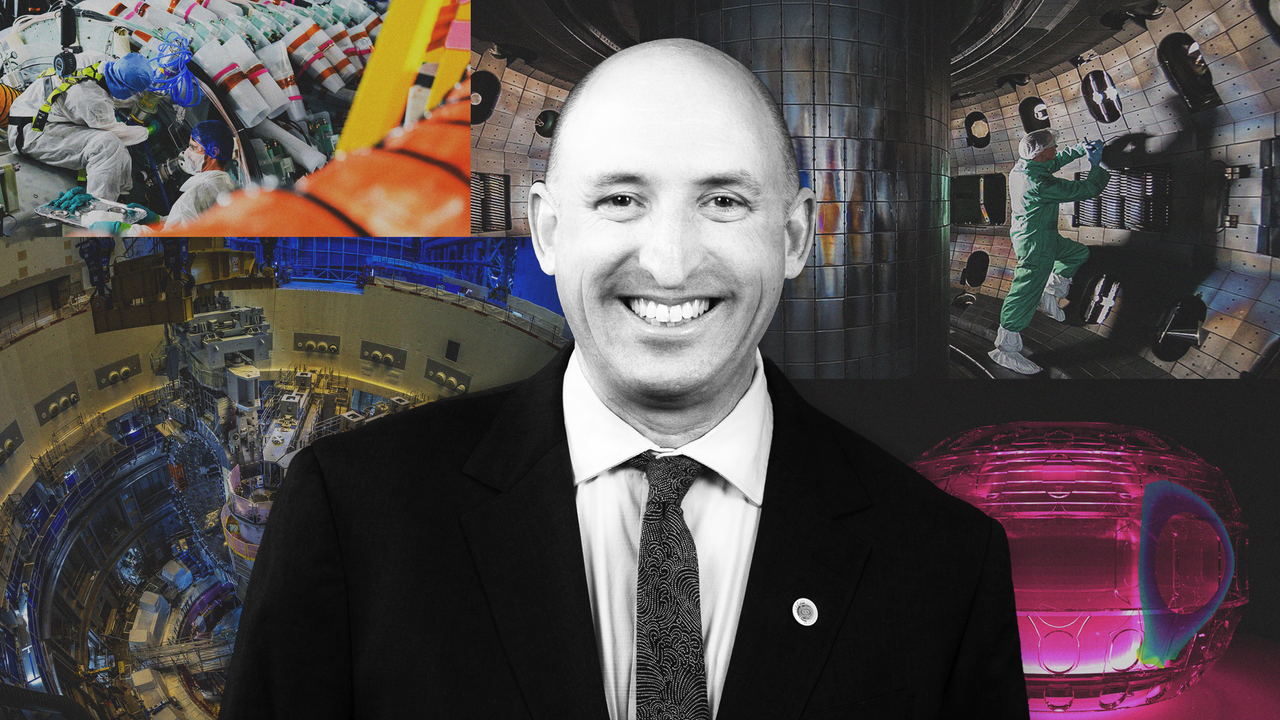
Fusion energy is suddenly flush with cash. Troy Carter knows that won’t be enough
The plasma physicist Troy Carter leads the U.S. fusion energy program at Oak Ridge National Laboratory. It’s one of science’s hottest and most humbling pursuits: trying to understand plasma, the superheated, electrically charged gas at the heart of stars—and, since the 1950s, every hydrogen bomb test and fusion experiment. Unlike the fission reactions that power the world’s 440 existing reactors, fusion promises relatively safer, zero-carbon power, with far less radioactive waste. For decades, it has been one of those breakthroughs supposedly just around the corner. Carter has spent much of that time focused on the physics. After two decades studying and teaching plasma at UCLA, he joined Oak Ridge in 2022 to lead its fusion program, just as the field was catching fire. That December, researchers at the National Ignition Facility in California achieved fusion ignition for the first time, producing more energy from a fusion reaction than the lasers used to start it. The milestone capped years of momentum: Fusion startups raised more than $13 billion in private capital between 2020 and 2025, compared with less than $2 billion in all the years before that, according to a report from the European Union released last year. That money has fueled a zoo of approaches to the plasma problem, from conventional donut-shaped tokamaks—these use magnetic fields to confine the superheated gas—to designs that federal labs had shelved decades earlier. Hyperscalers building AI data centers, meanwhile, were beginning to grasp that the grid could not supply the electricity they needed, and were signing power purchase agreements with fission and fusion companies that had yet to produce a single watt. But money alone can’t tame plasma. The sun confines fusion reactions with gravity. On Earth, companies are using powerful magnets, extreme temperatures, and new materials to push toward commercial power. For example, Commonwealth Fusion Systems’ SPARC depends on a new kind of superconducting